前言
咱们星球中的商城系统中使用了动态数据源的功能,实现了分库分表的订单库的读库和写库的自动切换。
有球友反馈说,对动态数据源不太熟悉。
今天这篇文章就专门跟大家一起聊聊动态数据源,希望对你会有所帮助。
一、为什么需要动态数据源?
有些小伙伴在开发中可能会遇到这样的场景:一个系统需要同时访问多个数据库,或者需要根据业务参数动态选择数据源。这
时候,传统的单数据源配置就显得力不从心了。
1.1 传统多数据源的问题
传统方式的多个数据源配置,硬编码,不灵活。
例如下面这样:
@Configuration public class TraditionalDataSourceConfig { @Bean @Primary public DataSource primaryDataSource() { HikariDataSource dataSource = new HikariDataSource(); dataSource.setJdbcUrl("jdbc:mysql://localhost:3306/db1"); dataSource.setUsername("user1"); dataSource.setPassword("pass1"); return dataSource; } @Bean public DataSource secondaryDataSource() { HikariDataSource dataSource = new HikariDataSource(); dataSource.setJdbcUrl("jdbc:mysql://localhost:3306/db2"); dataSource.setUsername("user2"); dataSource.setPassword("pass2"); return dataSource; } } 使用时需要手动管理数据源。
@Repository public class TraditionalUserDao { @Autowired @Qualifier("primaryDataSource") private DataSource primaryDataSource; @Autowired @Qualifier("secondaryDataSource") private DataSource secondaryDataSource; public User findUserFromPrimary(Long id) { // 需要手动获取连接、处理异常、关闭连接 try (Connection conn = primaryDataSource.getConnection(); PreparedStatement stmt = conn.prepareStatement("SELECT * FROM users WHERE id = ?")) { stmt.setLong(1, id); ResultSet rs = stmt.executeQuery(); // 处理结果集... } catch (SQLException e) { throw new RuntimeException("查询失败", e); } } } 每个方法都要重复这样的模板代码,需要手动指定数据源,很麻烦。
那么,如何做优化呢?
1.2 动态数据源的优势
接下来,我们一起看看使用动态数据源后的优雅代码。
@Service public class UserService { @Autowired private UserMapper userMapper; // 根据租户ID自动选择数据源 public User findUserByTenant(Long userId, String tenantId) { // 设置数据源上下文 DataSourceContextHolder.setDataSource(tenantId); try { return userMapper.selectById(userId); } finally { // 清理上下文 DataSourceContextHolder.clear(); } } // 多租户数据聚合查询 public UserAggregateInfo getUserAggregateInfo(Long userId) { UserAggregateInfo result = new UserAggregateInfo(); // 查询主库 DataSourceContextHolder.setDataSource("master"); result.setBaseInfo(userMapper.selectById(userId)); // 查询归档库 DataSourceContextHolder.setDataSource("archive"); result.setHistory(userMapper.selectHistory(userId)); // 查询统计库 DataSourceContextHolder.setDataSource("stats"); result.setStatistics(userMapper.selectStats(userId)); return result; } } 代码中能根据租户ID自动选择数据源。
代码一下子变得更优雅了。
二、动态数据源的原理
有些小伙伴在使用动态数据源时,可能只是简单配置使用,并不清楚其底层工作原理。
理解核心原理对于排查问题和性能优化至关重要。
下面跟大家一起聊聊动态数据源的核心原理,希望对你会有所帮助。
数据源路由的核心机制
动态数据源的核心在于AbstractRoutingDataSource,它是Spring框架提供的抽象类:
// Spring AbstractRoutingDataSource 源码分析 public abstract class AbstractRoutingDataSource extends AbstractDataSource implements InitializingBean { // 目标数据源映射表 private Map<Object, Object> targetDataSources; // 默认数据源 private Object defaultTargetDataSource; // 解析后的数据源映射 private Map<Object, DataSource> resolvedDataSources; // 解析后的默认数据源 private DataSource resolvedDefaultDataSource; // 关键方法:确定当前查找键 protected abstract Object determineCurrentLookupKey(); // 获取连接时选择数据源 @Override public Connection getConnection() throws SQLException { return determineTargetDataSource().getConnection(); } @Override public Connection getConnection(String username, String password) throws SQLException { return determineTargetDataSource().getConnection(username, password); } // 确定目标数据源 protected DataSource determineTargetDataSource() { // 获取查找键 Object lookupKey = determineCurrentLookupKey(); // 根据查找键获取数据源 DataSource dataSource = this.resolvedDataSources.get(lookupKey); if (dataSource == null && (this.resolvedDefaultDataSource != null || lookupKey == null)) { dataSource = this.resolvedDefaultDataSource; } if (dataSource == null) { throw new IllegalStateException("Cannot determine target DataSource for lookup key [" + lookupKey + "]"); } return dataSource; } } 线程安全的数据源上下文管理
/** * 数据源上下文管理器 - 核心组件 * 使用ThreadLocal保证线程安全 */ public class DataSourceContextHolder { // 使用ThreadLocal保证线程隔离 private static final ThreadLocal<String> CONTEXT_HOLDER = new ThreadLocal<>(); // 支持嵌套数据源切换的栈 private static final ThreadLocal<Deque<String>> DATASOURCE_STACK = ThreadLocal.withInitial(ArrayDeque::new); // 设置数据源 public static void setDataSource(String dataSource) { if (dataSource == null) { throw new IllegalArgumentException("数据源不能为null"); } CONTEXT_HOLDER.set(dataSource); // 同时压入栈,支持嵌套调用 DATASOURCE_STACK.get().push(dataSource); } // 获取当前数据源 public static String getDataSource() { return CONTEXT_HOLDER.get(); } // 清除数据源 public static void clear() { CONTEXT_HOLDER.remove(); Deque<String> stack = DATASOURCE_STACK.get(); if (!stack.isEmpty()) { stack.pop(); // 如果栈中还有元素,恢复到上一个数据源 if (!stack.isEmpty()) { CONTEXT_HOLDER.set(stack.peek()); } } } // 强制清除所有上下文(用于线程池场景) public static void clearCompletely() { CONTEXT_HOLDER.remove(); DATASOURCE_STACK.get().clear(); } // 判断是否已设置数据源 public static boolean hasDataSource() { return CONTEXT_HOLDER.get() != null; } } /** * 自定义路由数据源 */ @Component public class DynamicRoutingDataSource extends AbstractRoutingDataSource { // 所有可用的数据源 private final Map<Object, Object> targetDataSources = new ConcurrentHashMap<>(); @Override protected Object determineCurrentLookupKey() { String dataSourceKey = DataSourceContextHolder.getDataSource(); if (dataSourceKey == null) { // 返回默认数据源 return "default"; } // 验证数据源是否存在 if (!targetDataSources.containsKey(dataSourceKey)) { throw new IllegalArgumentException("数据源 " + dataSourceKey + " 不存在"); } logger.debug("当前使用数据源: {}", dataSourceKey); return dataSourceKey; } // 添加数据源 public void addDataSource(String key, DataSource dataSource) { this.targetDataSources.put(key, dataSource); // 更新目标数据源映射 setTargetDataSources(new HashMap<>(this.targetDataSources)); // 重新初始化 afterPropertiesSet(); } // 移除数据源 public void removeDataSource(String key) { if (this.targetDataSources.containsKey(key)) { DataSource dataSource = (DataSource) this.targetDataSources.remove(key); // 关闭数据源连接池 closeDataSource(dataSource); // 更新目标数据源映射 setTargetDataSources(new HashMap<>(this.targetDataSources)); afterPropertiesSet(); } } // 获取所有数据源 public Map<Object, Object> getTargetDataSources() { return Collections.unmodifiableMap(targetDataSources); } private void closeDataSource(DataSource dataSource) { if (dataSource instanceof HikariDataSource) { ((HikariDataSource) dataSource).close(); } else if (dataSource instanceof org.apache.tomcat.jdbc.pool.DataSource) { ((org.apache.tomcat.jdbc.pool.DataSource) dataSource).close(); } // 其他类型的数据源关闭逻辑... } } 动态数据源执行流程
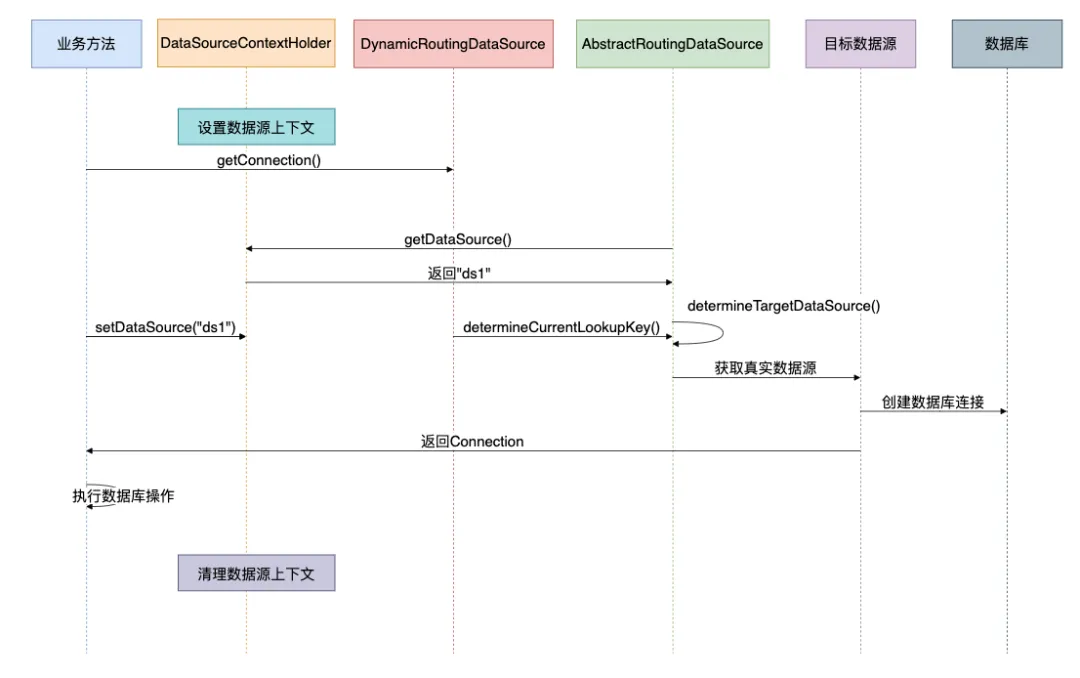
三、基于Spring Boot的完整实现
有些小伙伴在配置动态数据源时可能会遇到各种问题,下面我提供一个生产级别的完整实现。
完整配置实现
/** * 动态数据源配置类 */ @Configuration @EnableTransactionManagement @EnableConfigurationProperties(DynamicDataSourceProperties.class) public class DynamicDataSourceConfig { @Autowired private DynamicDataSourceProperties properties; /** * 主数据源(默认数据源) */ @Bean @ConfigurationProperties(prefix = "spring.datasource.master") public DataSource masterDataSource() { return DataSourceBuilder.create().build(); } /** * 从数据源1 */ @Bean @ConfigurationProperties(prefix = "spring.datasource.slave1") public DataSource slave1DataSource() { return DataSourceBuilder.create().build(); } /** * 从数据源2 */ @Bean @ConfigurationProperties(prefix = "spring.datasource.slave2") public DataSource slave2DataSource() { return DataSourceBuilder.create().build(); } /** * 动态数据源 */ @Bean @Primary public DataSource dynamicDataSource(DataSource masterDataSource, DataSource slave1DataSource, DataSource slave2DataSource) { Map<Object, Object> targetDataSources = new HashMap<>(8); targetDataSources.put("master", masterDataSource); targetDataSources.put("slave1", slave1DataSource); targetDataSources.put("slave2", slave2DataSource); DynamicRoutingDataSource dynamicDataSource = new DynamicRoutingDataSource(); // 设置默认数据源 dynamicDataSource.setDefaultTargetDataSource(masterDataSource); // 设置目标数据源 dynamicDataSource.setTargetDataSources(targetDataSources); return dynamicDataSource; } /** * 事务管理器 */ @Bean public PlatformTransactionManager transactionManager(DataSource dynamicDataSource) { return new DataSourceTransactionManager(dynamicDataSource); } /** * MyBatis配置 */ @Bean public SqlSessionFactory sqlSessionFactory(DataSource dynamicDataSource) throws Exception { SqlSessionFactoryBean sessionFactory = new SqlSessionFactoryBean(); sessionFactory.setDataSource(dynamicDataSource); // 配置MyBatis org.apache.ibatis.session.Configuration configuration = new org.apache.ibatis.session.Configuration(); configuration.setMapUnderscoreToCamelCase(true); configuration.setCacheEnabled(true); configuration.setLazyLoadingEnabled(false); configuration.setAggressiveLazyLoading(false); sessionFactory.setConfiguration(configuration); return sessionFactory.getObject(); } } /** * 数据源配置属性类 */ @ConfigurationProperties(prefix = "spring.datasource") @Data public class DynamicDataSourceProperties { /** * 主数据源配置 */ private HikariConfig master = new HikariConfig(); /** * 从数据源1配置 */ private HikariConfig slave1 = new HikariConfig(); /** * 从数据源2配置 */ private HikariConfig slave2 = new HikariConfig(); /** * 动态数据源配置 */ private DynamicConfig dynamic = new DynamicConfig(); @Data public static class DynamicConfig { /** * 默认数据源 */ private String primary = "master"; /** * 是否开启严格模式 */ private boolean strict = false; /** * 数据源健康检查间隔(秒) */ private long healthCheckInterval = 30; } } 应用配置文件
# application.yml spring: datasource: # 动态数据源配置 dynamic: primary: master strict: true health-check-interval: 30 # 主数据源 master: jdbc-url: jdbc:mysql://localhost:3306/master_db?useUnicode=true&characterEncoding=utf8&rewriteBatchedStatements=true username: root password: master_password driver-class-name: com.mysql.cj.jdbc.Driver maximum-pool-size: 20 minimum-idle: 5 connection-timeout: 30000 idle-timeout: 600000 max-lifetime: 1800000 pool-name: MasterHikariPool # 从数据源1 slave1: jdbc-url: jdbc:mysql://slave1:3306/slave_db?useUnicode=true&characterEncoding=utf8 username: root password: slave1_password driver-class-name: com.mysql.cj.jdbc.Driver maximum-pool-size: 15 minimum-idle: 3 connection-timeout: 30000 idle-timeout: 600000 max-lifetime: 1800000 pool-name: Slave1HikariPool # 从数据源2 slave2: jdbc-url: jdbc:mysql://slave2:3306/slave_db?useUnicode=true&characterEncoding=utf8 username: root password: slave2_password driver-class-name: com.mysql.cj.jdbc.Driver maximum-pool-size: 15 minimum-idle: 3 connection-timeout: 30000 idle-timeout: 600000 max-lifetime: 1800000 pool-name: Slave2HikariPool # MyBatis配置 mybatis: configuration: map-underscore-to-camel-case: true cache-enabled: true lazy-loading-enabled: false aggressive-lazy-loading: false 注解式数据源切换
/** * 数据源注解 */ @Target({ElementType.METHOD, ElementType.TYPE}) @Retention(RetentionPolicy.RUNTIME) @Documented public @interface DataSource { /** * 数据源名称 */ String value() default "master"; /** * 是否在方法执行后清除数据源(默认清除) */ boolean clear() default true; } /** * 数据源切面 */ @Aspect @Component @Slf4j public class DataSourceAspect { /** * 定义切点:所有标注@DataSource注解的方法 */ @Pointcut("@annotation(com.example.annotation.DataSource)") public void dataSourcePointCut() {} /** * 环绕通知:在方法执行前后切换数据源 */ @Around("dataSourcePointCut()") public Object around(ProceedingJoinPoint point) throws Throwable { MethodSignature signature = (MethodSignature) point.getSignature(); Method method = signature.getMethod(); DataSource dataSourceAnnotation = method.getAnnotation(DataSource.class); if (dataSourceAnnotation == null) { // 类级别注解 dataSourceAnnotation = point.getTarget().getClass().getAnnotation(DataSource.class); } if (dataSourceAnnotation != null) { String dataSourceKey = dataSourceAnnotation.value(); boolean clearAfter = dataSourceAnnotation.clear(); try { log.debug("切换数据源到: {}", dataSourceKey); DataSourceContextHolder.setDataSource(dataSourceKey); // 执行原方法 return point.proceed(); } finally { if (clearAfter) { DataSourceContextHolder.clear(); log.debug("清除数据源上下文"); } } } // 没有注解,使用默认数据源 return point.proceed(); } } 四、高级特性
有些小伙伴在基础功能实现后,可能会遇到一些高级场景的需求。
下面介绍几个生产环境中常用的高级特性。
读写分离自动路由
/** * 读写分离数据源路由器 */ @Component @Slf4j public class ReadWriteDataSourceRouter { // 读数据源列表 private final List<String> readDataSources = Arrays.asList("slave1", "slave2"); // 轮询计数器 private final AtomicInteger counter = new AtomicInteger(0); /** * 根据SQL自动选择数据源 */ public String determineDataSource(boolean isReadOperation) { if (isReadOperation && !readDataSources.isEmpty()) { // 读操作:轮询选择从库 int index = counter.getAndIncrement() % readDataSources.size(); if (counter.get() > 9999) { counter.set(0); // 防止溢出 } String readDataSource = readDataSources.get(index); log.debug("读操作选择数据源: {}", readDataSource); return readDataSource; } else { // 写操作:选择主库 log.debug("写操作选择数据源: master"); return "master"; } } /** * 根据SQL语句判断是否为读操作 */ public boolean isReadOperation(String sql) { if (sql == null) { return true; // 默认为读操作 } String trimmedSql = sql.trim().toLowerCase(); return trimmedSql.startsWith("select") || trimmedSql.startsWith("show") || trimmedSql.startsWith("explain"); } } /** * MyBatis拦截器 - 自动读写分离 */ @Intercepts({ @Signature(type = Executor.class, method = "update", args = {MappedStatement.class, Object.class}), @Signature(type = Executor.class, method = "query", args = {MappedStatement.class, Object.class, RowBounds.class, ResultHandler.class}) }) @Component @Slf4j public class ReadWriteInterceptor implements Interceptor { @Autowired private ReadWriteDataSourceRouter dataSourceRouter; @Override public Object intercept(Invocation invocation) throws Throwable { String methodName = invocation.getMethod().getName(); MappedStatement ms = (MappedStatement) invocation.getArgs()[0]; boolean isReadOperation = "query".equals(methodName); String sql = getSql(ms, invocation.getArgs()[1]); // 如果当前没有手动设置数据源,则自动选择 if (!DataSourceContextHolder.hasDataSource()) { String dataSource = dataSourceRouter.determineDataSource(isReadOperation); DataSourceContextHolder.setDataSource(dataSource); try { return invocation.proceed(); } finally { DataSourceContextHolder.clear(); } } return invocation.proceed(); } private String getSql(MappedStatement ms, Object parameter) { BoundSql boundSql = ms.getBoundSql(parameter); return boundSql.getSql(); } } 多租户数据源管理
/** * 多租户数据源管理器 */ @Component @Slf4j public class TenantDataSourceManager { @Autowired private DynamicRoutingDataSource dynamicRoutingDataSource; @Autowired private DataSourceProperties dataSourceProperties; // 租户数据源配置缓存 private final Map<String, TenantDataSourceConfig> tenantConfigCache = new ConcurrentHashMap<>(); /** * 根据租户ID获取数据源 */ public DataSource getDataSourceForTenant(String tenantId) { String dataSourceKey = "tenant_" + tenantId; // 检查是否已存在数据源 if (dynamicRoutingDataSource.getTargetDataSources().containsKey(dataSourceKey)) { return (DataSource) dynamicRoutingDataSource.getTargetDataSources().get(dataSourceKey); } // 动态创建数据源 synchronized (this) { if (!dynamicRoutingDataSource.getTargetDataSources().containsKey(dataSourceKey)) { DataSource dataSource = createTenantDataSource(tenantId); dynamicRoutingDataSource.addDataSource(dataSourceKey, dataSource); log.info("为租户 {} 创建数据源: {}", tenantId, dataSourceKey); } } return (DataSource) dynamicRoutingDataSource.getTargetDataSources().get(dataSourceKey); } /** * 动态创建租户数据源 */ private DataSource createTenantDataSource(String tenantId) { TenantDataSourceConfig config = getTenantConfig(tenantId); HikariDataSource dataSource = new HikariDataSource(); dataSource.setJdbcUrl(buildJdbcUrl(config)); dataSource.setUsername(config.getUsername()); dataSource.setPassword(config.getPassword()); dataSource.setDriverClassName("com.mysql.cj.jdbc.Driver"); dataSource.setMaximumPoolSize(10); dataSource.setMinimumIdle(2); dataSource.setConnectionTimeout(30000); dataSource.setIdleTimeout(600000); dataSource.setMaxLifetime(1800000); dataSource.setPoolName("TenantPool_" + tenantId); return dataSource; } /** * 获取租户数据源配置(可从配置中心或数据库获取) */ private TenantDataSourceConfig getTenantConfig(String tenantId) { return tenantConfigCache.computeIfAbsent(tenantId, key -> { // 这里可以从配置中心、数据库或缓存中获取租户配置 // 简化实现,实际项目中需要完善 TenantDataSourceConfig config = new TenantDataSourceConfig(); config.setHost("tenant-" + tenantId + ".db.example.com"); config.setPort(3306); config.setDatabase("tenant_" + tenantId); config.setUsername("tenant_" + tenantId); config.setPassword("password_" + tenantId); return config; }); } private String buildJdbcUrl(TenantDataSourceConfig config) { return String.format("jdbc:mysql://%s:%d/%s?useUnicode=true&characterEncoding=utf8&rewriteBatchedStatements=true", config.getHost(), config.getPort(), config.getDatabase()); } @Data public static class TenantDataSourceConfig { private String host; private int port; private String database; private String username; private String password; } } 数据源健康监控
/** * 数据源健康监控器 */ @Component @Slf4j public class DataSourceHealthMonitor { @Autowired private DynamicRoutingDataSource dynamicRoutingDataSource; private final ScheduledExecutorService scheduler = Executors.newScheduledThreadPool(1); // 健康状态缓存 private final Map<String, Boolean> healthStatus = new ConcurrentHashMap<>(); @PostConstruct public void init() { // 启动健康检查任务 scheduler.scheduleAtFixedRate(this::checkAllDataSources, 0, 30, TimeUnit.SECONDS); } /** * 检查所有数据源的健康状态 */ public void checkAllDataSources() { Map<Object, Object> dataSources = dynamicRoutingDataSource.getTargetDataSources(); for (Map.Entry<Object, Object> entry : dataSources.entrySet()) { String dataSourceKey = (String) entry.getKey(); DataSource dataSource = (DataSource) entry.getValue(); boolean isHealthy = checkDataSourceHealth(dataSource); healthStatus.put(dataSourceKey, isHealthy); if (!isHealthy) { log.warn("数据源 {} 健康检查失败", dataSourceKey); // 可以发送告警通知 } } } /** * 检查单个数据源健康状态 */ private boolean checkDataSourceHealth(DataSource dataSource) { try (Connection conn = dataSource.getConnection(); Statement stmt = conn.createStatement()) { ResultSet rs = stmt.executeQuery("SELECT 1"); return rs.next() && rs.getInt(1) == 1; } catch (SQLException e) { log.error("数据源健康检查异常", e); return false; } } /** * 获取数据源健康状态 */ public boolean isDataSourceHealthy(String dataSourceKey) { return healthStatus.getOrDefault(dataSourceKey, true); } /** * 获取健康的数据源列表 */ public List<String> getHealthyDataSources() { return healthStatus.entrySet().stream() .filter(Map.Entry::getValue) .map(Map.Entry::getKey) .collect(Collectors.toList()); } @PreDestroy public void destroy() { scheduler.shutdown(); } } 五、动态数据源的应用场景
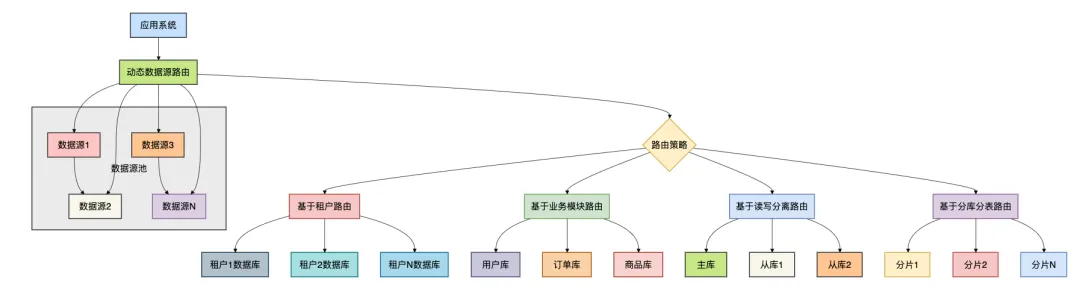
让我们通过架构图来理解动态数据源的典型应用场景:
六、优缺点
优点
- 灵活性高:支持运行时动态添加、移除数据源
- 解耦性好:业务代码与具体数据源解耦
- 扩展性强:易于实现读写分离、多租户等复杂场景
- 维护方便:数据源配置集中管理,便于维护
缺点
- 复杂度增加:系统架构变得更加复杂
- 事务管理复杂:跨数据源事务需要特殊处理
- 连接池开销:每个数据源都需要独立的连接池
- 调试困难:数据源切换增加了调试复杂度
七、生产环境注意事项
事务管理策略
/** * 多数据源事务管理器 */ @Component @Slf4j public class MultiDataSourceTransactionManager { /** * 在多个数据源上执行事务性操作 */ @Transactional(rollbackFor = Exception.class) public void executeInTransaction(Runnable task, String... dataSources) { if (dataSources.length == 1) { // 单数据源事务 DataSourceContextHolder.setDataSource(dataSources[0]); try { task.run(); } finally { DataSourceContextHolder.clear(); } } else { // 多数据源伪事务(最终一致性) executeWithCompensation(task, dataSources); } } /** * 使用补偿机制实现多数据源"事务" */ private void executeWithCompensation(Runnable task, String[] dataSources) { List<Runnable> compensationTasks = new ArrayList<>(); try { // 按顺序执行各个数据源的操作 for (String dataSource : dataSources) { DataSourceContextHolder.setDataSource(dataSource); try { // 执行实际业务操作 task.run(); // 记录补偿操作 compensationTasks.add(0, createCompensationTask(dataSource)); } finally { DataSourceContextHolder.clear(); } } } catch (Exception e) { // 执行补偿操作 log.error("多数据源操作失败,执行补偿操作", e); executeCompensation(compensationTasks); throw e; } } private void executeCompensation(List<Runnable> compensationTasks) { for (Runnable compensation : compensationTasks) { try { compensation.run(); } catch (Exception ex) { log.error("补偿操作执行失败", ex); // 记录补偿失败,需要人工介入 } } } } 性能优化建议
- 连接池优化:根据业务特点调整各数据源连接池参数
- 数据源预热:应用启动时预热常用数据源
- 缓存策略:缓存数据源配置和路由信息
- 监控告警:建立完善的数据源监控体系
总结
动态数据源是一个强大的技术方案,能够很好地解决多数据源管理的复杂性。
通过本文的详细解析,我们可以看到:
- 核心原理:基于
AbstractRoutingDataSource和ThreadLocal的上下文管理 - 实现方式:注解+AOP的声明式数据源切换
- 高级特性:读写分离、多租户、健康监控等生产级功能
- 适用场景:多租户、读写分离、分库分表等复杂数据架构
在实际项目中,建议根据具体业务需求选择合适的实现方案,不要过度设计。
同时,要建立完善的监控和运维体系,确保动态数据源的稳定运行。
最后说一句(求关注,别白嫖我)
如果这篇文章对您有所帮助,或者有所启发的话,帮忙关注一下我的同名公众号:苏三说技术,您的支持是我坚持写作最大的动力。
求一键三连:点赞、转发、在看。
关注公众号:【苏三说技术】,在公众号中回复:进大厂,可以免费获取我最近整理的10万字的面试宝典,好多小伙伴靠这个宝典拿到了多家大厂的offer。
更多项目实战在我的技术网站:http://www.susan.net.cn/project