在一些需要高质量文本转语音(TTS)的场景中(比如:有声书配音、播客等)。之前介绍的EdgeTTS方案可能效果没有那么好。此时就比较推荐使用 MiniMax、CosyVoice这些提供的音色,这些音色的效果会更加拟人、逼真,接近真人发音。这里依然通过 UnifiedTTS 的统一接口来对接,这样我们可以在不更换客户端代码的前提下,快速在 MiniMax、CosyVoice等引擎之间做无缝切换。本文将引导读者从零到一把MiniMax、CosyVoice的语音合成能力整合到你的Spring Boot应用中,最后也会给出一个可复制的 Spring Boot 集成示例,
实战
1. 构建 Spring Boot 应用
通过 start.spring.io 或其他构建基础的Spring Boot工程,根据你构建应用的需要增加一些依赖,比如最后用接口提供服务的话,可以加入web模块、lombok等常用依赖:
<dependencies> <dependency> <groupId>org.springframework.boot</groupId> <artifactId>spring-boot-starter-web</artifactId> </dependency> <dependency> <groupId>org.projectlombok</groupId> <artifactId>lombok</artifactId> </dependency> </dependencies> 2. 注册 UnifiedTTS,获取 API Key
- 前往 UnifiedTTS 注册并获取 API Key

- 记录下创建的ApiKey,后续程序配置的时候需要使用
3. 集成 UnifiedTTS API(使用 MiniMax、CosyVoice)
下面给出参考实现,包括配置、DTO、服务与控制器。与 EdgeTTS 版本相比,主要是将 model 与 voice 改为 MiniMax/CosyVoice 支持的参数。
3.1 配置文件(application.properties)
unified-tts.host=https://unifiedtts.com unified-tts.api-key=${UNIFIEDTTS_API_KEY} 这里 unified-tts.api-key 请替换为你在 UnifiedTTS 控制台创建的 API Key。
3.2 配置加载类与请求/响应封装
// src/main/java/com/example/tts/config/UnifiedTtsProperties.java @Data @ConfigurationProperties(prefix = "unified-tts") public class UnifiedTtsProperties { private String host; private String apiKey; } // src/main/java/com/example/tts/dto/UnifiedTtsRequest.java @Data @AllArgsConstructor @NoArgsConstructor public class UnifiedTtsRequest { private String model; // 例:minimax-tts 或 cosyvoice-tts private String voice; // 例:zh_female_1(按模型支持的音色选择) private String text; private Double speed; // 语速(可选) private Double pitch; // 音高(可选) private Double volume; // 音量(可选) private String format; // mp3/wav/ogg } // src/main/java/com/example/tts/dto/UnifiedTtsResponse.java @Data @AllArgsConstructor @NoArgsConstructor public class UnifiedTtsResponse { private boolean success; private String message; private long timestamp; private UnifiedTtsResponseData data; @Data @AllArgsConstructor @NoArgsConstructor public static class UnifiedTtsResponseData { @JsonProperty("request_id") private String requestId; @JsonProperty("audio_url") private String audioUrl; @JsonProperty("file_size") private long fileSize; } } 3.3 服务实现(RestClient 同步合成)
// src/main/java/com/example/tts/service/UnifiedTtsService.java package com.example.tts.service; import com.example.tts.dto.UnifiedTtsRequest; import com.example.tts.config.UnifiedTtsProperties; import org.springframework.http.MediaType; import org.springframework.http.ResponseEntity; import org.springframework.stereotype.Service; import org.springframework.web.client.RestClient; import java.io.IOException; import java.nio.file.Files; import java.nio.file.Path; @Service public class UnifiedTtsService { private final RestClient restClient; private final UnifiedTtsProperties properties; public UnifiedTtsService(UnifiedTtsProperties properties) { this.properties = properties; this.restClient = RestClient.builder() .baseUrl(properties.getHost()) .build(); } public byte[] synthesize(UnifiedTtsRequest request) { ResponseEntity<byte[]> response = restClient .post() .uri("/api/v1/common/tts-sync") .contentType(MediaType.APPLICATION_JSON) .accept(MediaType.APPLICATION_OCTET_STREAM, MediaType.valueOf("audio/mpeg"), MediaType.valueOf("audio/mp3")) .header("X-API-Key", properties.getApiKey()) .body(request) .retrieve() .toEntity(byte[].class); if (response.getStatusCode().is2xxSuccessful() && response.getBody() != null) { return response.getBody(); } throw new IllegalStateException("UnifiedTTS synthesize failed: " + response.getStatusCode()); } public Path synthesizeToFile(UnifiedTtsRequest request, Path outputPath) { byte[] data = synthesize(request); try { if (outputPath.getParent() != null) { Files.createDirectories(outputPath.getParent()); } Files.write(outputPath, data); return outputPath; } catch (IOException e) { throw new RuntimeException("Failed to write TTS output to file: " + outputPath, e); } } } 3.4 单元测试(MiniMax/CosyVoice)
// src/test/java/com/example/tts/UnifiedTtsServiceTest.java @SpringBootTest class UnifiedTtsServiceTest { @Autowired private UnifiedTtsService unifiedTtsService; @Test void testSynthesizeToFileWithMiniMax() throws Exception { UnifiedTtsRequest req = new UnifiedTtsRequest( "speech-02-turbo", "Chinese (Mandarin)_Gentle_Youth", "你好,欢迎使用 UnifiedTTS 的 MiniMax 模型配音。", 1.0, 0.0, 1.0, "mp3" ); Path projectDir = Paths.get(System.getProperty("user.dir")); Path resultDir = projectDir.resolve("test-result"); Files.createDirectories(resultDir); Path out = resultDir.resolve(System.currentTimeMillis() + ".mp3"); Path written = unifiedTtsService.synthesizeToFile(req, out); assertTrue(Files.exists(written), "Output file should exist"); assertTrue(Files.size(written) > 0, "Output file size should be > 0"); } } 4. 运行与验证
执行单元测试之后,可以在工程目录 test-result 下找到生成的音频文件:

如果你希望拿到音频 URL 或 Base64,可将接口 accept 改为 application/json 并解析返回结果,再做下载或解码。
5. 常用参数与音色选择
model:speech-02-turbo(示例),不同规格以官方为准;voice:示例Chinese (Mandarin)_Gentle_Youth等;rate:语速(建议范围 0.8–1.2);pitch:音高(建议范围 -3–+3);volume:音量(建议范围 0.8–1.2);format:mp3(常用)、wav(无损但体积大)、ogg等。
模型model与音色voice 这里推荐使用 minimax 或 cosyvoice的模型和音色。
具体支持的参数可以在API文档中的接口查询可以填入的参数,比如:
model支持,调用一下可以看到,支持的模型有:
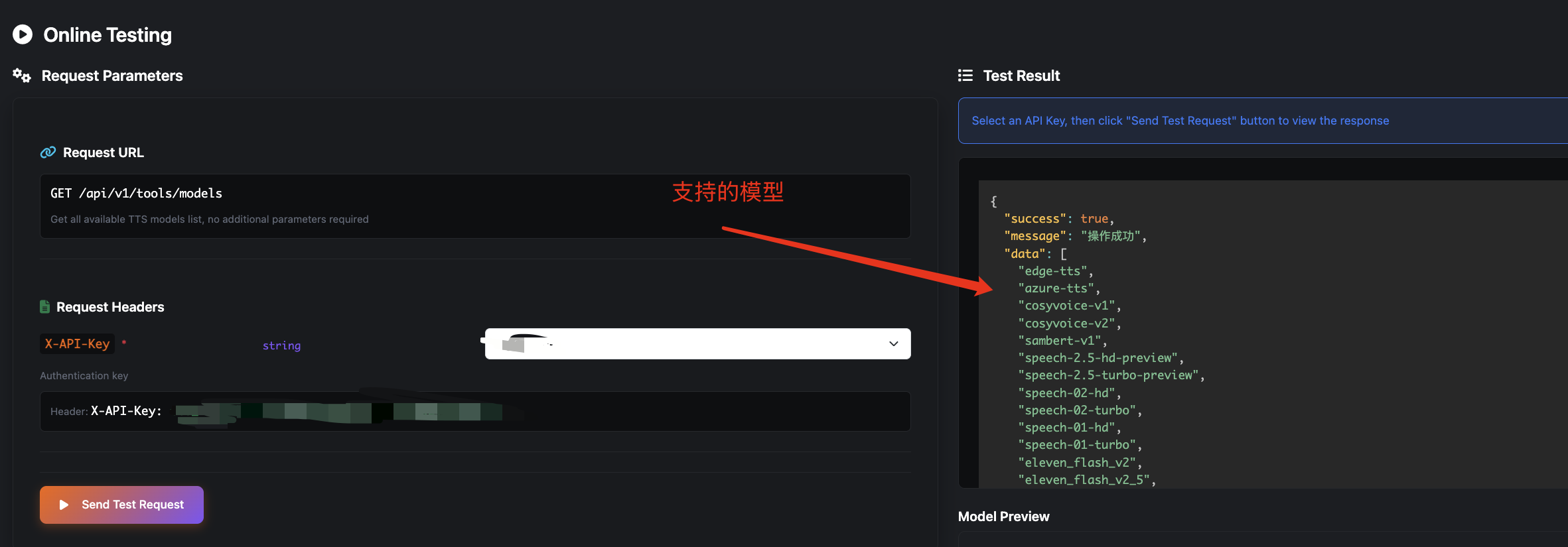
每个模型下支持的voice,也可以调用接口查询,比如这里尝试调用minimax支持的voice:

6. 异常处理与重试建议
- 超时与网络错误:设置
timeout-ms,在onErrorResume中记录原因; - 4xx/5xx:区分鉴权失败、限流、服务器错误并上报;
- 重试策略:对临时性错误采用指数退避(带抖动);
- 并发与限流:高并发场景实现队列或令牌桶;
- 缓存:对重复合成按
text+voice+params做缓存,降低成本与时延。
7. 生产化建议
- 安全:API Key 从环境变量或密钥管理系统注入;
- 监控:记录合成耗时、失败原因、重试比率;
- 存储:落盘或对象存储(如 S3)并设置生命周期;
- 规范:统一 DTO 与服务返回结构,便于多模型扩展;
- 扩展:通过配置切换 Azure/Edge/Elevenlabs/MiniMax 等模型。
小结
通过 UnifiedTTS,我们在 Spring Boot 中仅需调整 model 与 voice 即可切换到 MiniMax、CosyVoice、甚至最强的Elevenlabs,实现文本转语音。统一接口简化了多引擎维护成本,让你能在成本、音色与效果间自由选择。根据业务需求,还可进一步完善异常处理、缓存与并发控制,构建更可靠的生产级 TTS 服务。
另外,对比了官方API和UnifiedTTS的价格,后者更具备价格优势,所以非常推荐独立开发者或者初创产品的时候使用。不论从开发成本还是API成本角度看都是最佳选择。