

一直觉得很好的一个组件,网上介绍少得可怜,没办法,只有自己爬官网了,又是对照git又是看doc文档,总算是玩明白了,现在完全抛弃那个谁谁谁了。因人喜好各取所长吧
先来官方参考地址:
https://learn.microsoft.com/zh-cn/aspnet/core/fundamentals/openapi/include-metadata?view=aspnetcore-9.0&tabs=minimal-apis
这是scalar的.net 集成文档地址
https://guides.scalar.com/scalar/scalar-api-references/integrations/net-aspnet-core/integration
github地址
https://github.com/scalar/scalar
先放个图,诱惑一下,集成了很多主题,还可以自定主题(留给前端去玩吧)


一、简单使用
1.建立一个API项目,(最小,mvc都可)
2.引用包
dotnet add package Scalar.AspNetCore (当前版本2.9.0)
3.添加引用
using Scalar.AspNetCore;
4.添加配置,在Program.cs中添加下面配置
builder.Services.AddOpenApi(); if (app.Environment.IsDevelopment()) { app.MapOpenApi(); app.MapScalarApiReference(); }
现在运行一下,看看,localhost:xxxx/scalar
是不是看到列出漂亮的界面了?
二、基本配置
1.自定义路由
不想使用/salar,可以换成自己的地址
app.MapScalarApiReference("/api-docs"); app.MapScalarApiReference("/docs");
2.多文当或版本控制
// Chain multiple documents app.MapScalarApiReference(options => { options.AddDocument("v1", "Production API", "api/v1/openapi.json") .AddDocument("v2-beta", "Beta API", "api/v2-beta/openapi.json", isDefault: true) .AddDocument("internal", "Internal API", "internal/openapi.json"); });
isDefault: true是默认打开的页面
3.自定义文档的默认调试语言
app.MapScalarApiReference(options => { options.WithDefaultHttpClient(ScalarTarget.CSharp, ScalarClient.HttpClient); });

它对应右边窗口的语言,基本上都支持,java,php,rust,py,swift
三、高级配置
之前的老版本使用的硬编码option加配置,2.9.0以后,在界面右上角菜单栏上出现了一个编辑配置功能
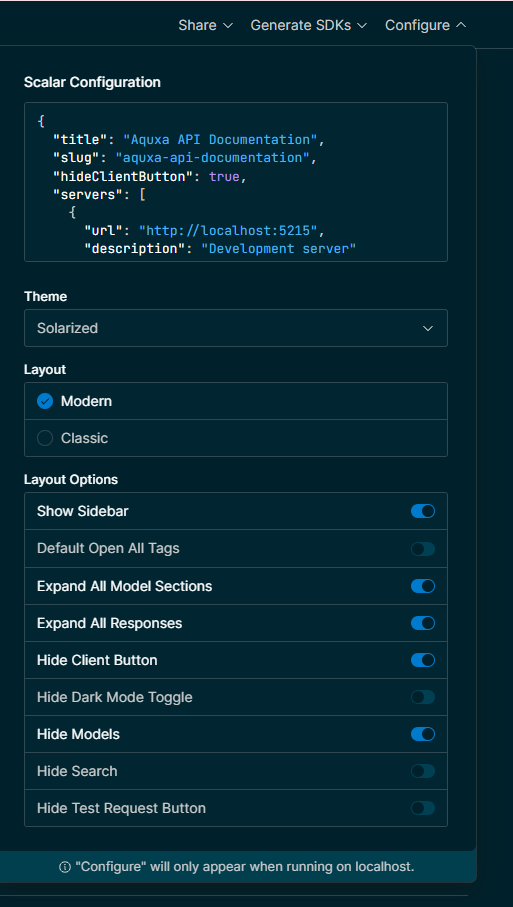
根据自己的喜好,调试编辑完配置文件后,可以复制到文件中单独保存,真是太贴心了
{ "title": "Aquxa API Documentation", "slug": "aquxa-api-documentation", "hideClientButton": true, "servers": [ { "url": "http://localhost:5215", "description": "Development server" } ], "showSidebar": true, "showToolbar": "localhost",//这里特别说明一下,编辑完后,不想出现这个菜单栏,就在这里可以关闭showToolbar: "never" "operationTitleSource": "summary", "theme": "solarized",//主题可以自己选,喜欢哪个选哪个 "_integration": "dotnet", "persistAuth": false, "telemetry": true, "layout": "modern", "isEditable": false, "isLoading": false, "hideModels": true, "documentDownloadType": "both", "hideTestRequestButton": false, "hideSearch": false, "showOperationId": false, "hideDarkModeToggle": false, "favicon": "favicon.svg", "withDefaultFonts": true, "defaultOpenAllTags": false, "expandAllModelSections": true, "expandAllResponses": true, "orderSchemaPropertiesBy": "alpha", "orderRequiredPropertiesFirst": true, "url": "http://localhost:5215/openapi/v1.json" }
PS:这里特别说明一下,编辑完后,不想出现这个菜单栏,就在这里可以关闭showToolbar: "never"
得到这个文件,保存到wwwroot/js/scalar-config.js,注意,一定要保存到能访问的静态目录里,并在program.cs添加静态目录的配置
app.UseStaticFiles(). //这个要放在scalar配置的前面,不然访问不到
添加配置文件加载
.WithJavaScriptConfiguration("/js/scalar-config.js")
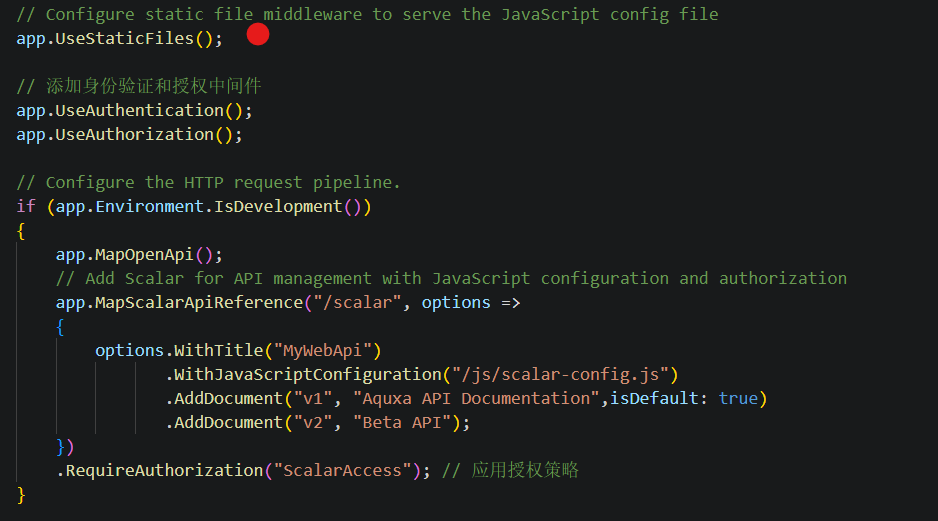
这里费了好大的劲,查官方,看代码,因为官方文档还是老文档,只是简单的概括了一下。最后整出来了
四、文档的编辑
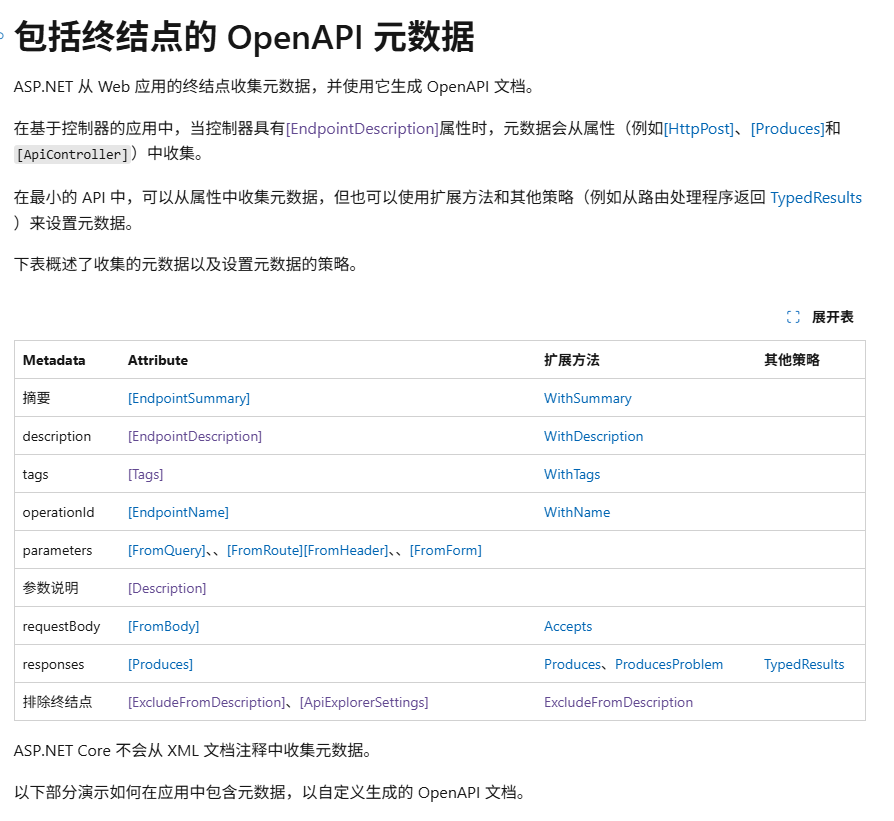
使用最重要的还是API文档编辑,其实它完全用的标准的OpenApi,只要参考这个表就可以完全配置了
[ApiController] [Route("api/[controller]")] [ApiExplorerSettings(GroupName = "v1")] [Tags("Admin")] // 为整个控制器添加标签 public class AdminController : ControllerBase { [HttpPost("reload-cache")] public IActionResult ReloadCache() { // 模拟重新加载缓存的操作 return Ok("Cache reloaded successfully"); } [HttpGet("stats")] public IActionResult GetStats() { return Ok(new { Users = 100, Requests = 1000 }); } }
下面说一下常用的特性
1.API分组
[ApiExplorerSettings]
这个比较熟悉,它可以分组,分版本,当你分好版本后[ApiExplorerSettings(GroupName = "v1")]/[ApiExplorerSettings(GroupName = "v2")],会在scalar中左上角可以选择,当然,你也可以把它做为组来用
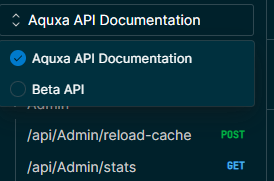
如果有不想显示的API也可以用[ApiExplorerSettings(IgnoreApi = true)]来排除显示
[HttpGet("/private")] [ApiExplorerSettings(IgnoreApi = true)] public IActionResult PrivateEndpoint() { return Ok("This is a private endpoint"); }
2.API分类
[Tags]
分类的API,会归档在一起,方便查询,这样看起来没有那么乱了
[Tags(["Admin", "OtherAPI"])] [HttpGet("attributes")] public IResult Attributes() { return Results.Ok("Hello world!"); }
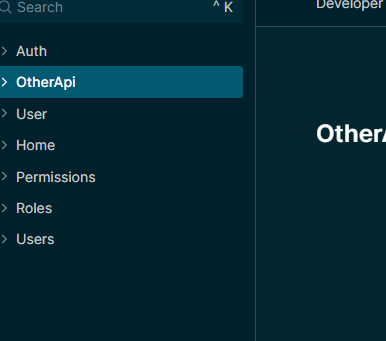
3.描述
[EndpointSummary("OtherApi")] [EndpointDescription("这是一个公开接口,无需认证")] [HttpGet("attributes")] public IResult Attributes() { return Results.Ok("Hello world!"); }
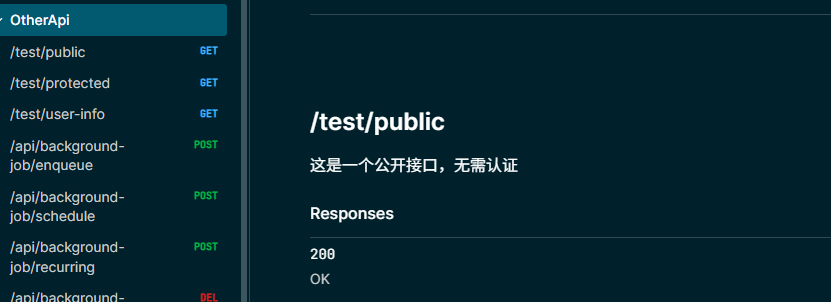
更多编辑文档就看这里吧
https://learn.microsoft.com/zh-cn/aspnet/core/fundamentals/openapi/include-metadata?view=aspnetcore-9.0&tabs=controllers
五、认证授权
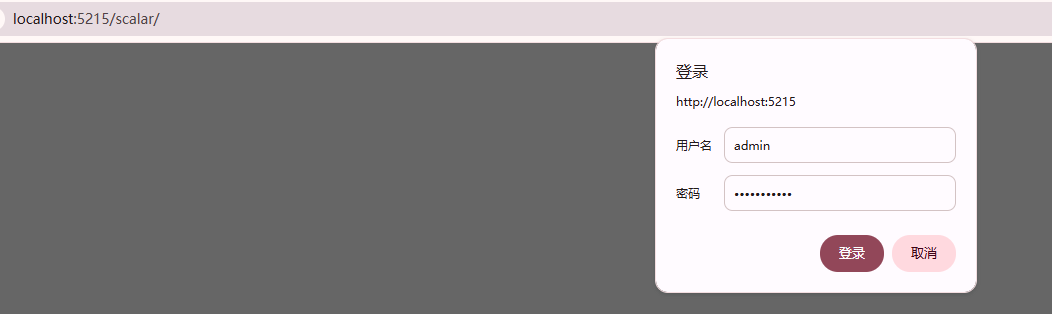
这里就使用自己的授权就可以,这里就偷懒找AI完成了。参考部分都有备注
using Scalar.AspNetCore; using Microsoft.AspNetCore.Authentication; using Microsoft.Extensions.Options; using System.Security.Claims; using System.Text.Encodings.Web; using Microsoft.AspNetCore.Mvc; using MyWebApi; // 添加对WeatherForecast的引用 var builder = WebApplication.CreateBuilder(args); // Add services to the container. // Learn more about configuring OpenAPI at https://aka.ms/aspnet/openapi builder.Services.AddOpenApi("v1"); builder.Services.AddOpenApi("v2"); // 添加控制器服务 builder.Services.AddControllers(); // 添加身份验证服务 builder.Services.AddAuthentication("BasicAuthentication") .AddScheme<AuthenticationSchemeOptions, BasicAuthenticationHandler>("BasicAuthentication", null); // 添加授权服务 builder.Services.AddAuthorization(options => { options.AddPolicy("ScalarAccess", policy => policy.RequireAuthenticatedUser()); }); // 配置服务器URL,避免端口冲突 builder.WebHost.UseUrls("http://localhost:5215"); var app = builder.Build(); // Configure static file middleware to serve the JavaScript config file app.UseStaticFiles(); // 添加身份验证和授权中间件 app.UseAuthentication(); app.UseAuthorization(); // Configure the HTTP request pipeline. if (app.Environment.IsDevelopment()) { app.MapOpenApi(); // Add Scalar for API management with JavaScript configuration and authorization app.MapScalarApiReference("/scalar", options => { options.WithTitle("MyWebApi") .WithJavaScriptConfiguration("/js/scalar-config.js") .AddDocument("v1", "Aquxa API Documentation",isDefault: true) .AddDocument("v2", "Beta API"); }) .RequireAuthorization("ScalarAccess"); // 应用授权策略 } // 添加控制器路由 app.MapControllers(); app.Run(); // Basic Authentication Handler public class BasicAuthenticationHandler : AuthenticationHandler<AuthenticationSchemeOptions> { public BasicAuthenticationHandler( IOptionsMonitor<AuthenticationSchemeOptions> options, ILoggerFactory logger, UrlEncoder encoder) : base(options, logger, encoder) { } protected override async Task<AuthenticateResult> HandleAuthenticateAsync() { // 检查是否有Authorization头 if (!Request.Headers.ContainsKey("Authorization")) return AuthenticateResult.NoResult(); try { // 解析Basic认证头 var authHeader = Request.Headers["Authorization"].ToString(); if (!authHeader.StartsWith("Basic ")) return AuthenticateResult.NoResult(); var encodedCredentials = authHeader.Substring("Basic ".Length).Trim(); var decodedCredentials = System.Text.Encoding.UTF8.GetString(Convert.FromBase64String(encodedCredentials)); var credentials = decodedCredentials.Split(':', 2); var username = credentials[0]; var password = credentials[1]; // 验证用户名和密码(这里使用硬编码,实际应用中应从配置或数据库获取) if (username == "admin" && password == "password123") { var claims = new[] { new Claim(ClaimTypes.Name, username) }; var identity = new ClaimsIdentity(claims, Scheme.Name); var principal = new ClaimsPrincipal(identity); var ticket = new AuthenticationTicket(principal, Scheme.Name); return AuthenticateResult.Success(ticket); } return AuthenticateResult.Fail("Invalid username or password"); } catch { return AuthenticateResult.Fail("Invalid Authorization Header"); } } protected override async Task HandleChallengeAsync(AuthenticationProperties properties) { // 发送WWW-Authenticate头以触发浏览器的认证对话框 Response.Headers["WWW-Authenticate"] = "Basic realm="Scalar API Documentation""; await base.HandleChallengeAsync(properties); } }



![洛谷 P11345 [KTSC 2023 R2] 基地简化 题解](http://www.itfaba.com/wp-content/themes/kemi/timthumb.php?src=http://www.itfaba.com/wp-content/themes/kemi/img/random/2.jpg&w=218&h=124&zc=1)
