1. String
1.1. 是什么
不可变、线程安全的字符串
1.2. 使用
public class StringTest { public static void main(String[] args) { String val = new String("test1"); String val1 = new String("test1"); System.out.println(val == val1);//false。上面的代码会在堆中两块不同的地方创建字符串 String val2 = "test2"; String val3 = "test2"; System.out.println(val2 == val3);//true。上面的代码在编译期间已经确定,那么会把"test2"保存在常量池(不是堆中) String val4 = "te" + "st2"; System.out.println(val2 == val4);//true。虽然val4是通过+拼接的,但是这个也是可以在编译期确定的,所以使用的仍是常量池中的字符串 String val5 = String.valueOf("test3"); String val6 = String.valueOf("test3"); System.out.println(val5 == val6);//true。"test3"在编译期间已经确定,放入常量池中。String.valueOf返回的是常量池中的字符串 String aa = new String("1111"); String bb = new String("1111"); String val9 = String.valueOf(aa); String val10 = String.valueOf(bb); System.out.println(val9 == val10);//false。两个"1111"分别在堆中创建,String.valueOf返回的是堆中不同的对象 String val7 = new String("test4"); String val8 = "test4"; String val7Intern = val7.intern(); System.out.println(val8 == val7);//false。val7在堆中,val8在常量池中,自然不相等 System.out.println(val8 == val7Intern);//true。intern方法的作用是在运行时往常量池中增加字符串,如果常量池池中已有,那么把常量池中的对象返回 System.out.println(val8 == val7);//false。再试验一次说明intern方法不是把堆中的地址塞到常量池中 } } 1.3. 源码分析
1.3.1. 类的定义
//final表示不能被继承 public final class String //可比较,可序列化 implements java.io.Serializable, Comparable<String>, CharSequence { /** The value is used for character storage. */ //底层是通过char数组实现的,final表示引用不能修改,但并不表示char数组里的值不能修改 //那为什么String还是不可变的呢?因为String并没有提供修改value数组值的方法,所以自然就不可变 private final char value[]; /** Cache the hash code for the string */ private int hash; // Default to 0 } String是不可变的
- 类使用final修饰
- 内部属性char value[]使用final修饰,说明引用不能改变
- 且内部没有对外提供修改内部属性char value[]的方法
1.3.2. 构造方法
//无参构造方法 public String() { //会创建一个空串 this.value = "".value; } //使用String构造 public String(String original) { //直接把引用指向同一个字符数组?因为String内部的char数组是不可以改变的,所以可以共享 this.value = original.value; this.hash = original.hash; } //使用char数组构造 public String(char value[]) { //外部传递过来的char数组可能被改变,所有需要复制数组 this.value = Arrays.copyOf(value, value.length); } //使用StringBuffer构造 public String(StringBuffer buffer) { //线程安全的StringBUffer需要加锁并且复制数组 synchronized(buffer) { this.value = Arrays.copyOf(buffer.getValue(), buffer.length()); } } //使用StringBuilde构造 public String(StringBuilder builder) { //复制数组 this.value = Arrays.copyOf(builder.getValue(), builder.length()); } //使用char数组带下标的构造 public String(char value[], int offset, int count) { if (offset < 0) { throw new StringIndexOutOfBoundsException(offset); } if (count <= 0) { if (count < 0) { throw new StringIndexOutOfBoundsException(count); } if (offset <= value.length) { this.value = "".value; return; } } // Note: offset or count might be near 1>>>1. if (offset > value.length count) { throw new StringIndexOutOfBoundsException(offset + count); } //复制char数组 this.value = Arrays.copyOfRange(value, offset, offset+count); } 1.3.2.1. 解释new String("test1") != new String("test1")
String val = new String("test1"); String val1 = new String("test1"); System.out.println(val == val1);//false。上面的代码会在堆中两块不同的地方创建字符串 我们查看字节码,结果如下:
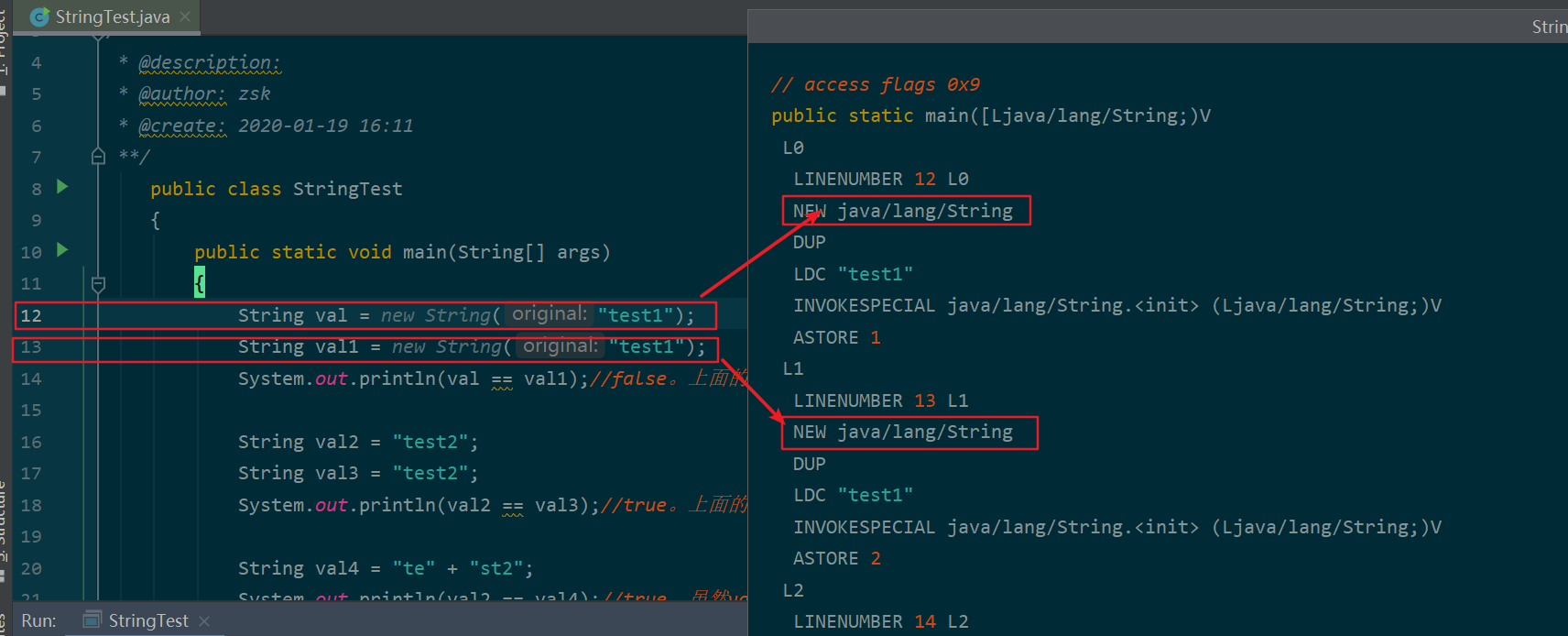
调用的字节码时NEW,会在堆中创建字符串,所以两者不同
1.3.3. 常量池
英文名叫constant pool,指的是在编译期被确定,并被保存在已编译的.class文件中的一些数据。它包括了关于类、方法、接口等中的常量,也包括字符串常量
1.3.3.1. 解释"test2"=="test2"
String val2 = "test2"; String val3 = "test2"; System.out.println(val2 == val3);//true。上面的代码在编译期间已经确定,那么会把"test2"保存在常量池(不是堆中) String val4 = "te" + "st2"; System.out.println(val2 == val4);//true。虽然val4是通过+拼接的,但是这个也是可以在编译期确定的,所以使用的仍是常量池中的字符串 我们查看字节码,结果如下:
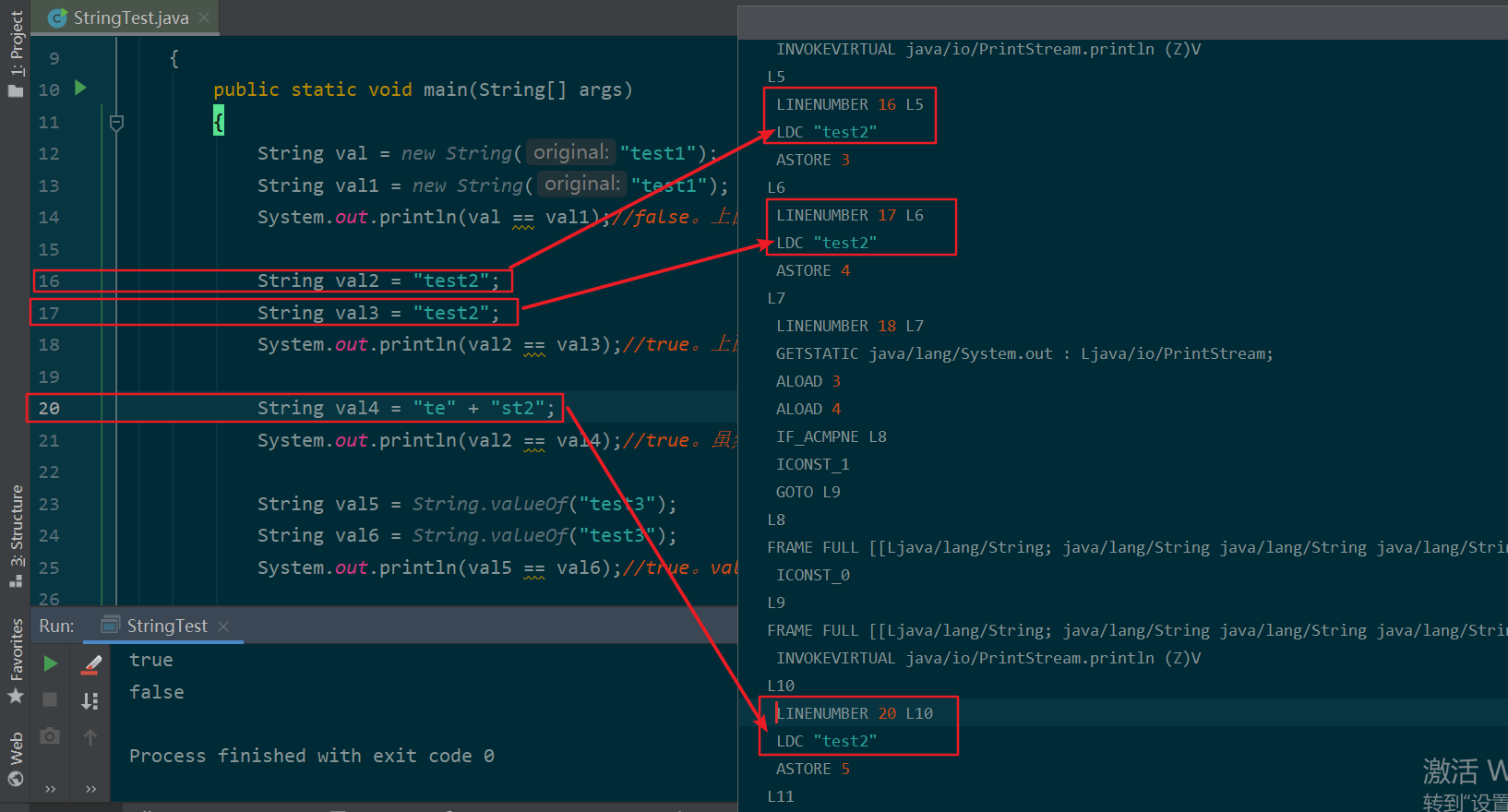
可以看出上面三行都调用了LDC字节码,他表示在常量池中加载字符串,而"test2"这个字符串在编译器会存入.class文件中,因此三者相等
1.3.4. equals方法
public boolean equals(Object anObject) { //首先比较引用是否相等 if (this == anObject) { return true; } //如果是个字符串 if (anObject instanceof String) { String anotherString = (String)anObject; int n = value.length; //字符数组长度相等 if (n == anotherString.value.length) { char v1[] = value; char v2[] = anotherString.value; int i = 0; //从后往前比较value是否相等 while (n != 0) { if (v1[i] != v2[i]) return false; i++; } return true; } } return false; } 1.3.5. toCharArray方法
public char[] toCharArray() { // Cannot use Arrays.copyOf because of class initialization order issues //创建一个新的char数组 char result[] = new char[value.length]; //调用arraycopy函数把value的值复制到新的char数组返回(防止外界改变char数组的值) System.arraycopy(value, 0, result, 0, value.length); return result; } 1.3.6. toString
public String toString() { //直接返回自己 return this; } 1.3.7. valueOf
public static String valueOf(Object obj) { //为null的话返回“null”,否则调用obj的toString return (obj == null) ? "null" : obj.toString(); } 1.3.7.1. 解释String.valueOf("test3") == String.valueOf("test3")
String val5 = String.valueOf("test3"); String val6 = String.valueOf("test3"); System.out.println(val5 == val6);//true。"test3"在编译期间已经确定,放入常量池中。String.valueOf返回的是常量池中的字符串 
对于String val5 = String.valueOf("test3")这种代码,编译器首先会把他当作String val5 = "test3"处理,把"test3"放入常量池中,然后调用String.valueOf方法返回常量池中的"test3"字符串,所以两者相等。
- 再看一个例子
String aa = new String("1111"); String bb = new String("1111"); String val9 = String.valueOf(aa); String val10 = String.valueOf(bb); System.out.println(val9 == val10);//false。两个"1111"分别在堆中创建,String.valueOf返回的是堆中不同的对象 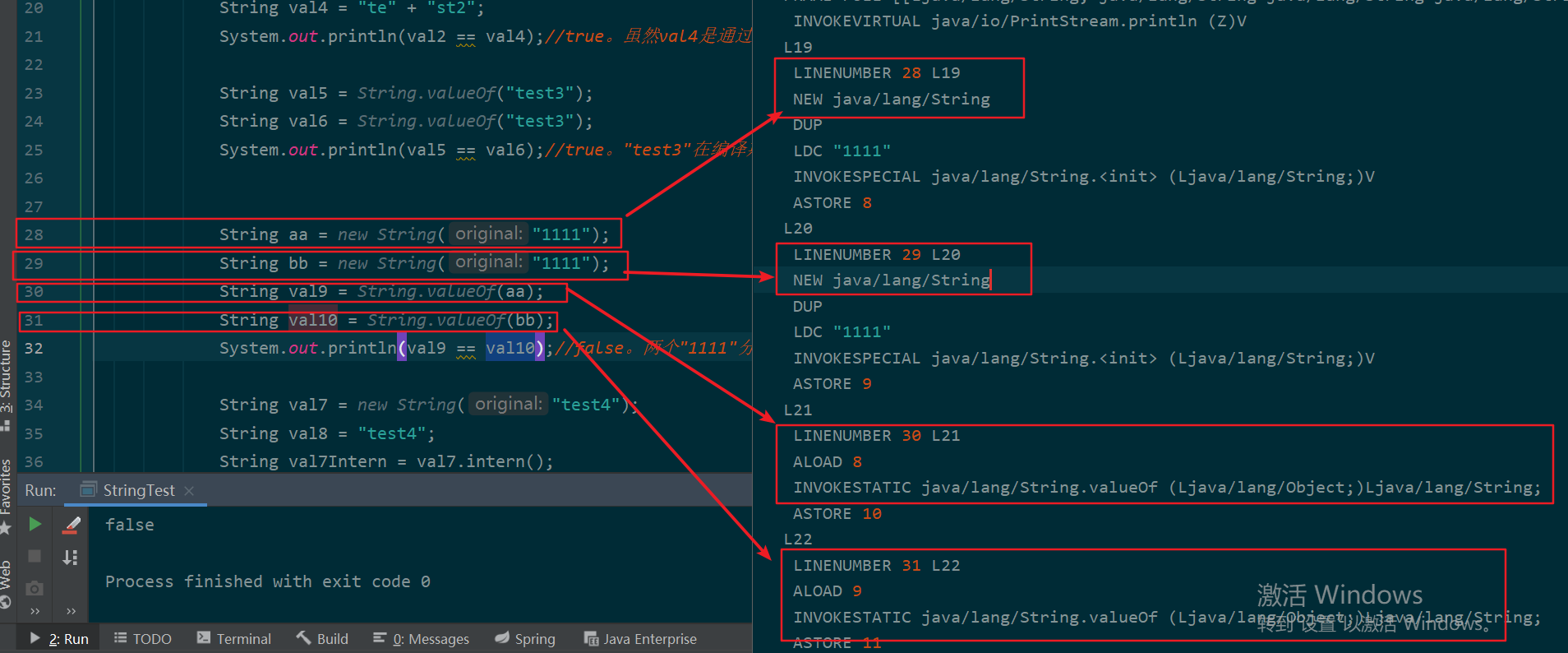
String aa = new String("1111")这种先在堆中创建字符串"1111",然后String val9 = String.valueOf(aa)返回的是堆中的字符串,所以两者不等
1.3.8. intern方法
//运行时往常量池增加字符串 //调用intern方法的时候,如果常量池中已经存在一个字符串与这个字符串相等,那么返回常量池的中字符串。 //没有的话会在常量池中创建这个字符串,然后才返回。 public native String intern(); 1.3.8.1. 解释new String("test4").intern() == "test4"
String val7 = new String("test4"); String val8 = "test4"; String val7Intern = val7.intern(); System.out.println(val8 == val7);//false。val7在堆中,val8在常量池中,自然不相等 System.out.println(val8 == val7Intern);//true。intern方法的作用是在运行时往常量池中增加字符串,如果常量池池中已有,那么把常量池中的对象返回 System.out.println(val8 == val7);//false。再试验一次说明intern方法不是把堆中的地址塞到常量池中 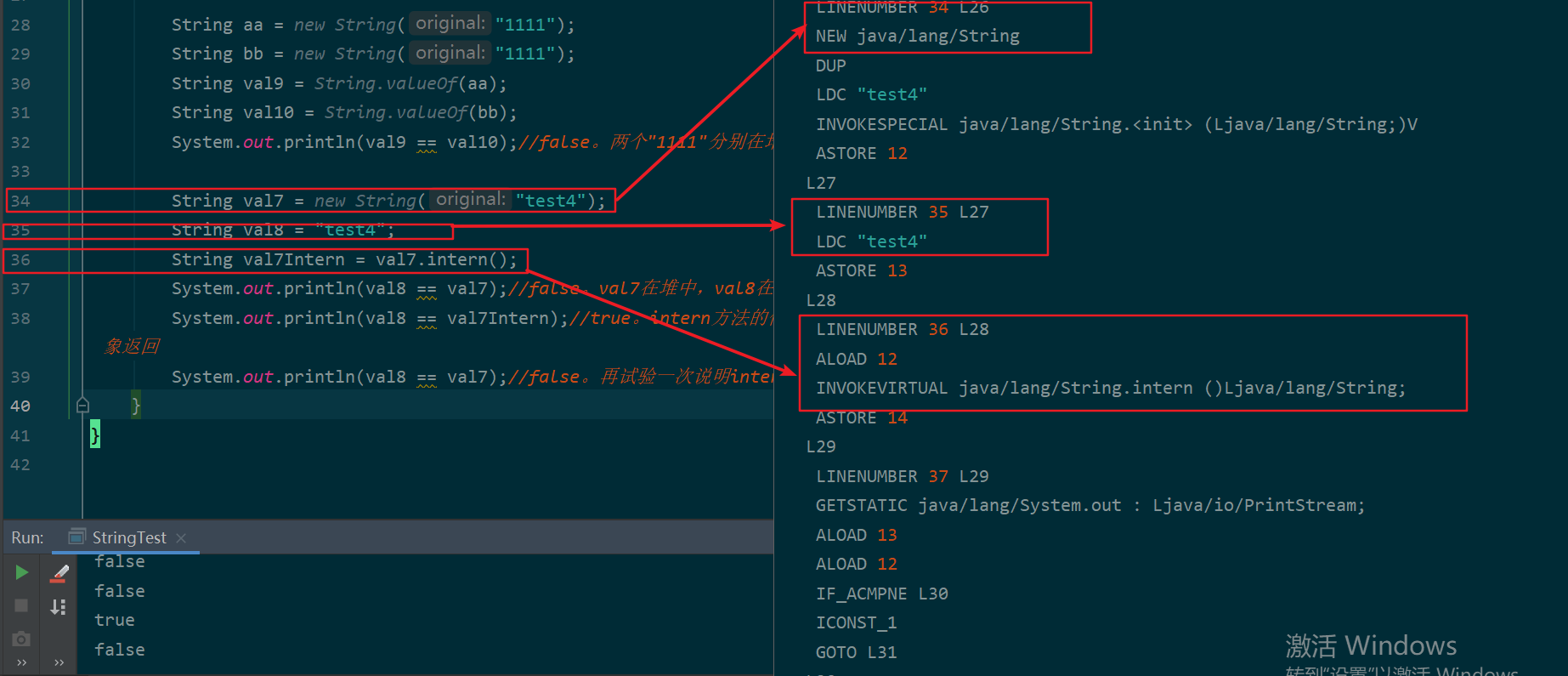
String val7 = new String("test4")是堆中的字符串"test4",String val8 = "test4"是常量池中的"test4",String val7Intern = val7.intern()intern首先检查常量池中是否有"test4",发现有直接返回
1.3.9. subString
String substring(int beginIndex, int endIndex) { //下标越界判断 if (beginIndex < 0) { throw new StringIndexOutOfBoundsException(beginIndex); } if (endIndex > value.length) { throw new StringIndexOutOfBoundsException(endIndex); } int subLen = endIndex beginIndex; if (subLen < 0) { throw new StringIndexOutOfBoundsException(subLen); } //返回自己或者调用使用char数组带下标的构造函数 return ((beginIndex == 0) && (endIndex == value.length)) ? this : new String(value, beginIndex, subLen); } 1.4. 常见问题
1.4.1. toString和valueOf的区别
String aa = null; //System.out.println(aa.toString());//抛出异常 System.out.println(String.valueOf(aa));//null 前者没有做为空判断,后者做了。
1.4.2. String的不可变性
String这个类是由final修饰的,意味着不能被继承
String内部通过char数组实现,而这个数组是用final修饰的。意味着一旦赋值就不能改变引用,而且String也没有提供修改字符数组内容的方法
用下面的例子解释:
String a = "aaa"; a = "bbb";//这里的可变String类型的引用改变了,但是原有的值没有变化 //这种看似修改的方法实际上返回的是一个新的String对象 String c= a.subString(1,2); 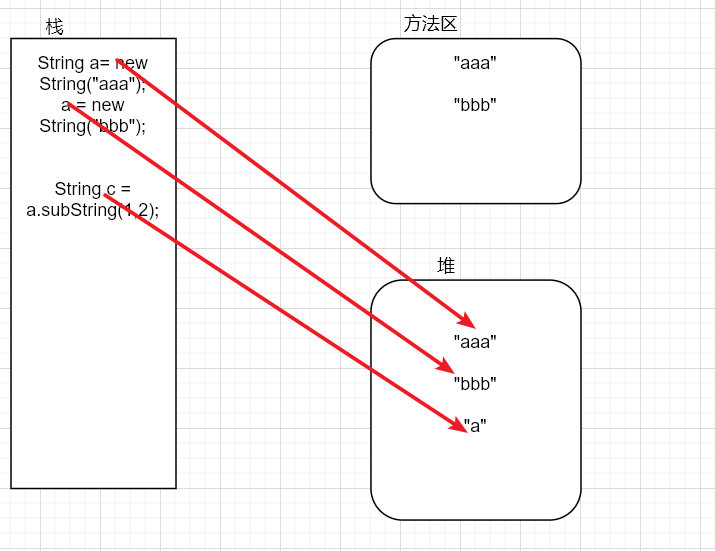
1.4.3. 线程安全
因为不可变所以线程安全
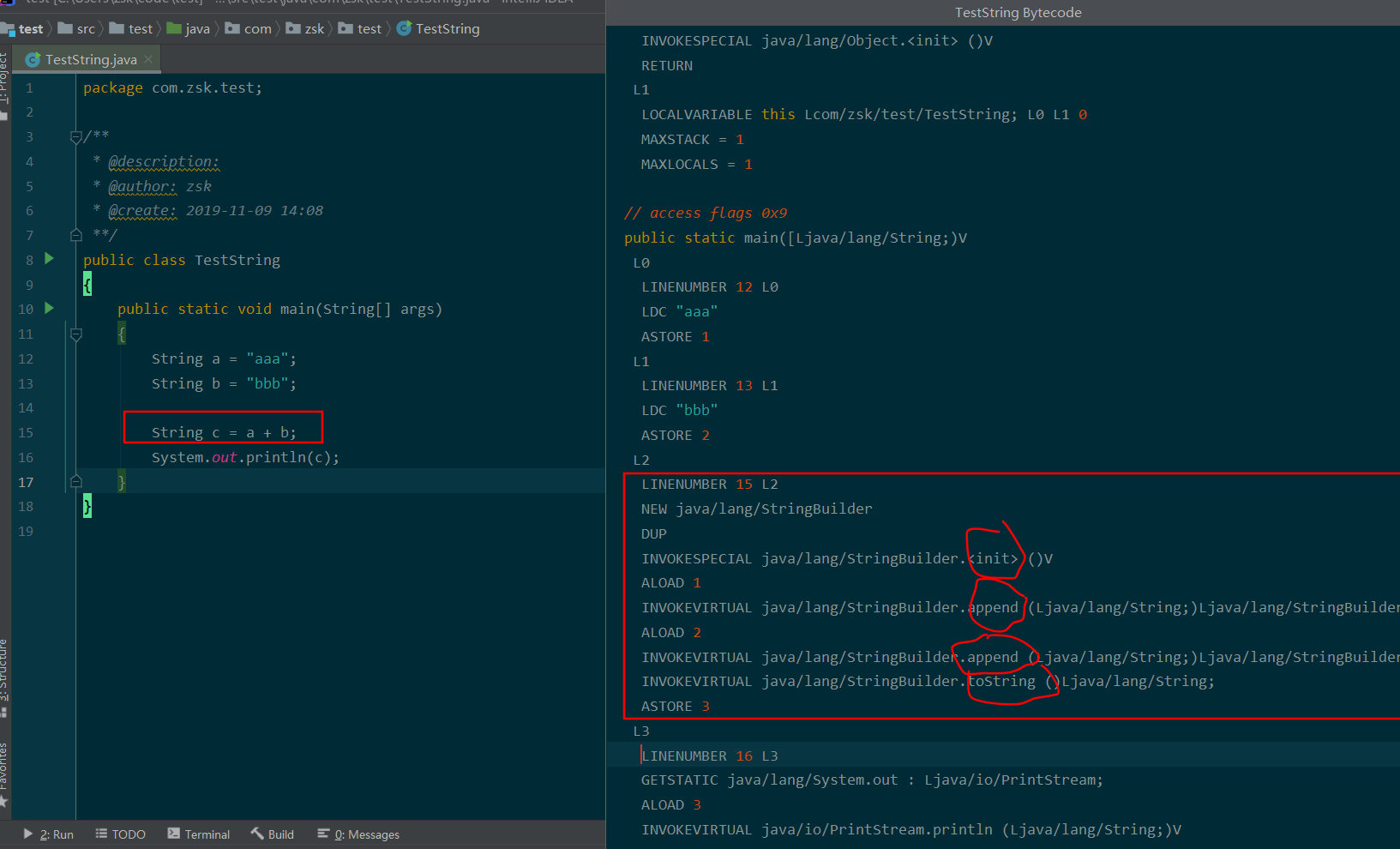
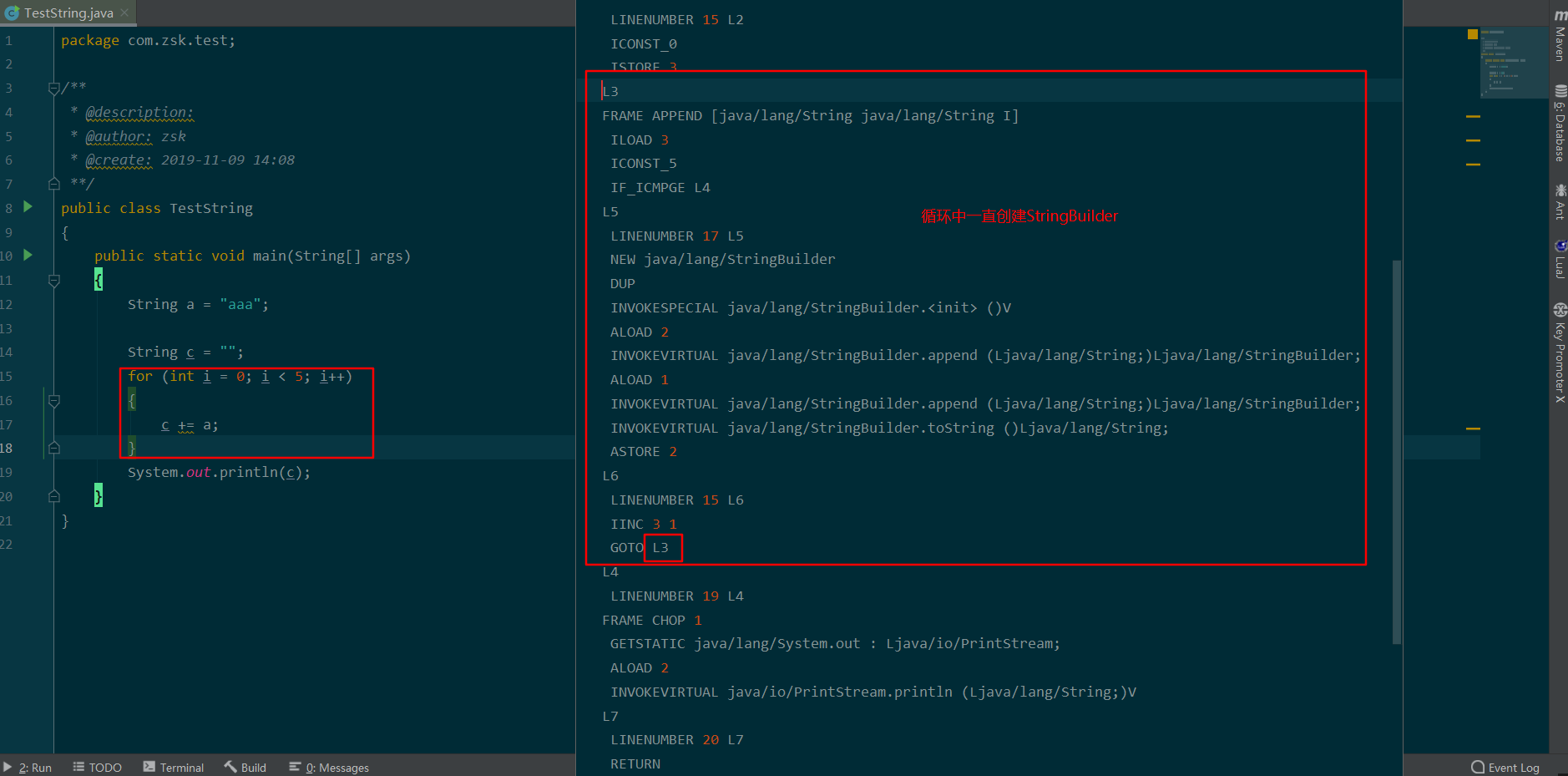
public class TestString { public static void main(String[] args) throws InterruptedException { String string = "0"; TestThread testThread = new TestThread(string);//因为不可变,所以传递进去无论做了什么操作都不影响 testThread.start(); testThread.join(); System.out.println(string);//0 } } class TestThread extends Thread { private String string; public TestThread(String string) { this.string = string; } @Override public void run() { this.string += "test"; System.out.println(Thread.currentThread().getName() + ":" + this.string); } } 1.4.4. String对+的重载
实际上使用的StringBuilder,并且调用append方法,最后调用toString方法
-
普通+


-
循环+

1.4.5. replaceFirst、replaceAll、replace区别
String replaceFirst(String regex, String replacement)
基于正则的替换,替换第一个String replaceAll(String regex, String replacement)
基于正则的替换,替换全部String replace(Char Sequencetarget, Char Sequencereplacement)
普通的比较替换,替换全部
1.4.6. String s = new String("abc")创建了几个字符串对象
- 当加载类时,"abc"被创建并驻留在了字符创常量池中(如果先前加载中没有创建驻留过)。
- 当执行此句时,因为"abc"对应的String实例已经存在于字符串常量池中,所以JVM会将此实例复制到会在堆(heap)中并返回引用地址
2. StringBuilder
2.1. 是什么
线程安全的、可变字符串
其实就是在StringBuilder的基础上加了synchronized关键字
2.2. 如何使用
public class TestStringBuilder { public static void main(String[] args) throws InterruptedException { StringBuffer stringBuffer = new StringBuffer(); Thread thread1 = new Thread(() -> { for (int i = 0; i < 5000; i++) { stringBuffer.append("aaaa"); } }); Thread thread2 = new Thread(() -> { for (int i = 0; i < 5000; i++) { stringBuffer.append("aaaa"); } }); thread1.start(); thread2.start(); thread1.join(); thread2.join(); System.out.println(stringBuffer.toString()); System.out.println(stringBuffer.length() == 5000 * 2 * 4);//true } } 2.3. 原理分析
2.3.1. 构造函数
public final class StringBuffer//一样是final的 extends AbstractStringBuilder implements java.io.Serializable, CharSequence { public StringBuffer() { //跟StringBuilder一样调用AbstractStringBuilder的构造方法 super(16);//默认容量16个 } } abstract class AbstractStringBuilder implements Appendable, CharSequence { char[] value; int count; AbstractStringBuilder(int capacity) { value = new char[capacity]; } } 2.3.2. append方法
//加了synchronized修饰 public synchronized StringBuffer append(String str) { toStringCache = null; super.append(str); return this; } 2.3.3. toString
//加了synchronized修饰 public synchronized String toString() { if (toStringCache == null) { toStringCache = Arrays.copyOfRange(value, 0, count); } return new String(toStringCache, true); } 2.3.4. subString
public synchronized String substring(int start, int end) { return super.substring(start, end); } 3. StringBuffer
3.1. 是什么
线程安全的、可变字符串
其实就是在StringBuilder的基础上加了synchronized关键字
3.2. 如何使用
public class TestStringBuilder { public static void main(String[] args) throws InterruptedException { StringBuffer stringBuffer = new StringBuffer(); Thread thread1 = new Thread(() -> { for (int i = 0; i < 5000; i++) { stringBuffer.append("aaaa"); } }); Thread thread2 = new Thread(() -> { for (int i = 0; i < 5000; i++) { stringBuffer.append("aaaa"); } }); thread1.start(); thread2.start(); thread1.join(); thread2.join(); System.out.println(stringBuffer.toString()); System.out.println(stringBuffer.length() == 5000 * 2 * 4);//true } } 3.3. 原理分析
3.3.1. 构造函数
public final class StringBuffer//一样是final的 extends AbstractStringBuilder implements java.io.Serializable, CharSequence { public StringBuffer() { //跟StringBuilder一样调用AbstractStringBuilder的构造方法 super(16);//默认容量16个 } } abstract class AbstractStringBuilder implements Appendable, CharSequence { char[] value; int count; AbstractStringBuilder(int capacity) { value = new char[capacity]; } } 3.3.2. append方法
//加了synchronized修饰 public synchronized StringBuffer append(String str) { toStringCache = null; super.append(str); return this; } 3.3.3. toString
//加了synchronized修饰 public synchronized String toString() { if (toStringCache == null) { toStringCache = Arrays.copyOfRange(value, 0, count); } return new String(toStringCache, true); } 3.3.4. subString
public synchronized String substring(int start, int end) { return super.substring(start, end); } 4. StringBuilder vs StringBuffer vs String
| String | StringBuffer | StringBuilder | |
|---|---|---|---|
| 是否线程安全 | √ | √ | × |
| 是否可变 | × | √ | √ |