

命令模式是对一类对象公共操作的抽象,它们具有相同的方法签名,所以具有类似的操作,可以被抽象出来,成为一个抽象的命令对象。实际操作的调用者就不是和一组对象打交道,它是需要以来这个命令对象的方法签名,并根据这个签名调用相关的方法。
以上是命令模式的大概含义,这里可以联想到事件驱动,command和handler,也可以联想到AOP的思想。联想到数据流的操作我就写了个数据流操作类库。
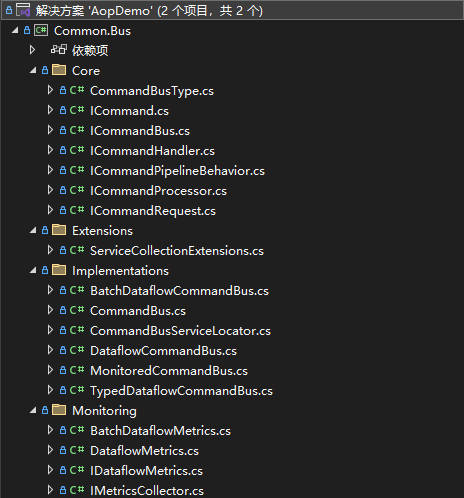

之前写了一些有关AOP的,但是感觉还是差点意思,补上这次的可能在项目中会弥补一些短板回来,就是灵活性。
但是该项目重点是数据流的处理,所以web端来实现只是一个例子,大量数据的处理最主要的是后台任务吧,通过接口调用只是一个实例展示。
有关数据流这块代码核心如下:
using System; using System.Collections.Concurrent; using System.Collections.Generic; using System.Linq; using System.Reflection; using System.Threading; using System.Threading.Tasks; using System.Threading.Tasks.Dataflow; using Microsoft.Extensions.DependencyInjection; using Microsoft.Extensions.Logging; using Common.Bus.Core; using Common.Bus.Monitoring; namespace Common.Bus.Implementations { /// <summary> /// 基于TPL数据流的高性能CommandBus实现 /// 支持并行处理、背压控制和监控 /// </summary> public class DataflowCommandBus : ICommandBus, IDisposable { private readonly IServiceProvider _provider; private readonly ILogger<DataflowCommandBus>? _logger; private readonly ConcurrentDictionary<Type, Func<object>> _handlerCache = new(); private readonly ConcurrentDictionary<Type, Func<object[]>> _behaviorsCache = new(); // 数据流网络 private ActionBlock<DataflowCommandRequest> _commandProcessor = null!; // 背压控制 private readonly SemaphoreSlim _concurrencyLimiter; private readonly int _maxConcurrency; // 监控指标 private long _processedCommands; private long _failedCommands; private long _totalProcessingTime; public DataflowCommandBus(IServiceProvider serviceProvider, ILogger<DataflowCommandBus>? logger = null, int? maxConcurrency = null) { _provider = serviceProvider; _logger = logger; _maxConcurrency = maxConcurrency ?? Environment.ProcessorCount * 2; _concurrencyLimiter = new SemaphoreSlim(_maxConcurrency, _maxConcurrency); // 创建数据流网络 CreateDataflowNetwork(); } private void CreateDataflowNetwork() { // 创建命令处理器 _commandProcessor = new ActionBlock<DataflowCommandRequest>( async request => { try { await _concurrencyLimiter.WaitAsync(); var startTime = DateTime.UtcNow; // 执行完整的命令处理管道 var result = await ProcessCommandPipeline(request); var processingTime = DateTime.UtcNow - startTime; Interlocked.Add(ref _totalProcessingTime, processingTime.Ticks); Interlocked.Increment(ref _processedCommands); request.TaskCompletionSource.SetResult(result); } catch (Exception ex) { Interlocked.Increment(ref _failedCommands); _logger?.LogError(ex, "Command processing failed for {CommandType}", request.CommandType.Name); request.TaskCompletionSource.SetException(ex); } finally { _concurrencyLimiter.Release(); } }, new ExecutionDataflowBlockOptions { MaxDegreeOfParallelism = _maxConcurrency, BoundedCapacity = _maxConcurrency * 2 }); } public async Task<TResult> SendAsync<TCommand, TResult>(TCommand command, CancellationToken ct = default) where TCommand : ICommand<TResult> { var commandType = typeof(TCommand); var requestId = Guid.NewGuid(); var tcs = new TaskCompletionSource<object>(); var request = new DataflowCommandRequest(requestId, commandType, typeof(TResult), command, tcs); // 发送到数据流网络 if (!_commandProcessor.Post(request)) { throw new InvalidOperationException("Unable to queue command for processing - system may be overloaded"); } try { var result = await tcs.Task.WaitAsync(ct); return (TResult)result; } catch (OperationCanceledException) when (ct.IsCancellationRequested) { _logger?.LogWarning("Command {CommandType} was cancelled", commandType.Name); throw; } } private async Task<object> ProcessCommandPipeline(DataflowCommandRequest request) { // 使用反射调用泛型方法 var method = typeof(DataflowCommandBus).GetMethod(nameof(ProcessCommandPipelineGeneric), BindingFlags.NonPublic | BindingFlags.Instance); var genericMethod = method!.MakeGenericMethod(request.CommandType, request.ResultType); var task = (Task)genericMethod.Invoke(this, new object[] { request })!; await task; var resultProperty = task.GetType().GetProperty("Result"); return resultProperty?.GetValue(task) ?? throw new InvalidOperationException("Failed to get result from task"); } private async Task<TResult> ProcessCommandPipelineGeneric<TCommand, TResult>(DataflowCommandRequest request) where TCommand : ICommand<TResult> { // 获取处理器和行为的工厂函数 var handlerFactory = GetCachedHandler<TCommand, TResult>(request.CommandType); var behaviorsFactory = GetCachedBehaviors<TCommand, TResult>(request.CommandType); // 创建处理器和行为的实例 var handler = handlerFactory(); var behaviors = behaviorsFactory(); // 构建处理管道 Func<Task<TResult>> pipeline = () => ExecuteHandler<TCommand, TResult>(handler, (TCommand)request.Command); // 按顺序应用管道行为 foreach (var behavior in behaviors.Reverse()) { var currentBehavior = behavior; var currentPipeline = pipeline; pipeline = async () => (TResult)await ExecuteBehavior(currentBehavior, (TCommand)request.Command, currentPipeline); } return await pipeline(); } private async Task<object> ExecuteBehavior<TCommand, TResult>( ICommandPipelineBehavior<TCommand, TResult> behavior, TCommand command, Func<Task<TResult>> next) where TCommand : ICommand<TResult> { try { var result = await behavior.Handle(command, next, CancellationToken.None); return result!; } catch (Exception ex) { throw new InvalidOperationException($"Error executing behavior {behavior.GetType().Name}: {ex.Message}", ex); } } private Func<ICommandHandler<TCommand, TResult>> GetCachedHandler<TCommand, TResult>(Type commandType) where TCommand : ICommand<TResult> { return (Func<ICommandHandler<TCommand, TResult>>)_handlerCache.GetOrAdd(commandType, _ => { return new Func<ICommandHandler<TCommand, TResult>>(() => { using var scope = _provider.CreateScope(); var handler = scope.ServiceProvider.GetService<ICommandHandler<TCommand, TResult>>(); if (handler == null) throw new InvalidOperationException($"No handler registered for {commandType.Name}"); return handler; }); }); } private Func<ICommandPipelineBehavior<TCommand, TResult>[]> GetCachedBehaviors<TCommand, TResult>(Type commandType) where TCommand : ICommand<TResult> { return (Func<ICommandPipelineBehavior<TCommand, TResult>[]>)_behaviorsCache.GetOrAdd(commandType, _ => { return new Func<ICommandPipelineBehavior<TCommand, TResult>[]>(() => { using var scope = _provider.CreateScope(); var behaviors = scope.ServiceProvider.GetServices<ICommandPipelineBehavior<TCommand, TResult>>().ToArray(); return behaviors; }); }); } private async Task<TResult> ExecuteHandler<TCommand, TResult>(ICommandHandler<TCommand, TResult> handler, TCommand command) where TCommand : ICommand<TResult> { return await handler.HandleAsync(command, CancellationToken.None); } private async Task<object> ExecuteHandler(object handler, object command) { var handlerType = handler.GetType(); var handleMethod = handlerType.GetMethod("HandleAsync"); if (handleMethod == null) throw new InvalidOperationException($"Handler {handlerType.Name} does not have HandleAsync method"); var task = (Task)handleMethod.Invoke(handler, new object[] { command, CancellationToken.None })!; await task; var resultProperty = task.GetType().GetProperty("Result"); return resultProperty?.GetValue(task) ?? throw new InvalidOperationException("Failed to get result from task"); } private Func<object> GetCachedHandler(Type commandType) { return _handlerCache.GetOrAdd(commandType, _ => { // 获取命令类型实现的ICommand<TResult>接口 var commandInterface = commandType.GetInterfaces() .FirstOrDefault(i => i.IsGenericType && i.GetGenericTypeDefinition() == typeof(ICommand<>)); if (commandInterface == null) throw new InvalidOperationException($"Command type {commandType.Name} does not implement ICommand<TResult>"); var resultType = commandInterface.GetGenericArguments()[0]; var handlerType = typeof(ICommandHandler<,>).MakeGenericType(commandType, resultType); // 返回一个工厂函数,而不是直接返回处理器实例 return new Func<object>(() => { using var scope = _provider.CreateScope(); var handler = scope.ServiceProvider.GetService(handlerType); if (handler == null) throw new InvalidOperationException($"No handler registered for {commandType.Name}"); return handler; }); }); } private Func<object[]> GetCachedBehaviors(Type commandType) { return _behaviorsCache.GetOrAdd(commandType, _ => { // 获取命令类型实现的ICommand<TResult>接口 var commandInterface = commandType.GetInterfaces() .FirstOrDefault(i => i.IsGenericType && i.GetGenericTypeDefinition() == typeof(ICommand<>)); if (commandInterface == null) throw new InvalidOperationException($"Command type {commandType.Name} does not implement ICommand<TResult>"); var resultType = commandInterface.GetGenericArguments()[0]; var behaviorType = typeof(ICommandPipelineBehavior<,>).MakeGenericType(commandType, resultType); // 返回一个工厂函数,而不是直接返回行为实例 return new Func<object[]>(() => { using var scope = _provider.CreateScope(); var behaviors = scope.ServiceProvider.GetServices(behaviorType).Where(b => b != null).ToArray(); return behaviors!; }); }); } // 监控和统计方法 public DataflowMetrics GetMetrics() { return new DataflowMetrics { ProcessedCommands = Interlocked.Read(ref _processedCommands), FailedCommands = Interlocked.Read(ref _failedCommands), TotalProcessingTime = TimeSpan.FromTicks(Interlocked.Read(ref _totalProcessingTime)), AverageProcessingTime = _processedCommands > 0 ? TimeSpan.FromTicks(Interlocked.Read(ref _totalProcessingTime) / _processedCommands) : TimeSpan.Zero, AvailableConcurrency = _concurrencyLimiter.CurrentCount, MaxConcurrency = _maxConcurrency, InputQueueSize = _commandProcessor.InputCount }; } public void ClearCache() { _handlerCache.Clear(); _behaviorsCache.Clear(); } public void Dispose() { _commandProcessor?.Complete(); _concurrencyLimiter?.Dispose(); } } // 辅助类 internal class DataflowCommandRequest { public Guid Id { get; } public Type CommandType { get; } public Type ResultType { get; } public object Command { get; } public TaskCompletionSource<object> TaskCompletionSource { get; } public DataflowCommandRequest(Guid id, Type commandType, Type resultType, object command, TaskCompletionSource<object> tcs) { Id = id; CommandType = commandType; ResultType = resultType; Command = command; TaskCompletionSource = tcs; } } }
这里如果不是数据流方式可以使用通用模式:
using System; using System.Collections.Concurrent; using System.Collections.Generic; using System.Linq; using System.Text; using System.Threading.Tasks; using Microsoft.Extensions.DependencyInjection; using Common.Bus.Core; namespace Common.Bus.Implementations { public class CommandBus : ICommandBus { private readonly IServiceProvider _provider; private readonly ConcurrentDictionary<Type, Func<object>> _handlerCache = new(); private readonly ConcurrentDictionary<Type, Func<object[]>> _behaviorsCache = new(); private readonly ConcurrentDictionary<Type, Func<object, object, CancellationToken, Task<object>>> _pipelineCache = new(); public CommandBus(IServiceProvider serviceProvider) { _provider = serviceProvider; } // 添加清理缓存的方法,用于测试或动态重新加载 public void ClearCache() { _handlerCache.Clear(); _behaviorsCache.Clear(); _pipelineCache.Clear(); } public async Task<TResult> SendAsync<TCommand, TResult>(TCommand command, CancellationToken ct = default) where TCommand : ICommand<TResult> { var commandType = typeof(TCommand); // 获取缓存的Handler var handler = GetCachedHandler<TCommand, TResult>(commandType); // 获取缓存的Pipeline var pipeline = GetCachedPipeline<TCommand, TResult>(commandType); // 执行Pipeline var result = await pipeline(handler, command, ct); return (TResult)result; } private ICommandHandler<TCommand, TResult> GetCachedHandler<TCommand, TResult>(Type commandType) where TCommand : ICommand<TResult> { var handlerFactory = (Func<object>)_handlerCache.GetOrAdd(commandType, _ => { return new Func<object>(() => { using var scope = _provider.CreateScope(); var handler = scope.ServiceProvider.GetService(typeof(ICommandHandler<TCommand, TResult>)); if (handler == null) throw new InvalidOperationException($"No handler registered for {commandType.Name}"); return handler; }); }); return (ICommandHandler<TCommand, TResult>)handlerFactory(); } private ICommandPipelineBehavior<TCommand, TResult>[] GetCachedBehaviors<TCommand, TResult>(Type commandType) where TCommand : ICommand<TResult> { var behaviorsFactory = (Func<object[]>)_behaviorsCache.GetOrAdd(commandType, _ => { return new Func<object[]>(() => { using var scope = _provider.CreateScope(); var behaviors = scope.ServiceProvider.GetServices<ICommandPipelineBehavior<TCommand, TResult>>().ToArray(); return behaviors.Cast<object>().ToArray(); }); }); return behaviorsFactory().Cast<ICommandPipelineBehavior<TCommand, TResult>>().ToArray(); } private Func<object, object, CancellationToken, Task<object>> GetCachedPipeline<TCommand, TResult>(Type commandType) where TCommand : ICommand<TResult> { return _pipelineCache.GetOrAdd(commandType, _ => { var behaviors = GetCachedBehaviors<TCommand, TResult>(commandType); // 预构建Pipeline,避免每次调用时重新构建 return async (handler, command, ct) => { if (handler == null || command == null) throw new ArgumentNullException("Handler or command cannot be null"); var typedHandler = (ICommandHandler<TCommand, TResult>)handler; var typedCommand = (TCommand)command; // 如果没有behaviors,直接调用handler if (behaviors.Length == 0) { var result = await typedHandler.HandleAsync(typedCommand, ct); return (object)result!; } // 使用递归方式构建pipeline,减少委托创建 var pipelineResult = await ExecutePipeline(typedHandler, typedCommand, behaviors, 0, ct); return (object)pipelineResult!; }; }); } private async Task<TResult> ExecutePipeline<TCommand, TResult>( ICommandHandler<TCommand, TResult> handler, TCommand command, ICommandPipelineBehavior<TCommand, TResult>[] behaviors, int behaviorIndex, CancellationToken ct) where TCommand : ICommand<TResult> { if (behaviorIndex >= behaviors.Length) { return await handler.HandleAsync(command, ct); } var behavior = behaviors[behaviorIndex]; return await behavior.Handle(command, () => ExecutePipeline(handler, command, behaviors, behaviorIndex + 1, ct), ct); } } }
其他批量操作、带监控等模式就参考其他代码:
exercisebook/AOP/EventBusAOP/AopNew at main · liuzhixin405/exercisebook
一下是项目更详细介绍,如有错误多多指正:
# CommandBus AOP 项目
这是一个基于AOP(面向切面编程)的CommandBus项目,使用TPL Dataflow进行数据流处理优化,支持多种CommandBus实现和实时监控。
## CommandBus实现类型
### 1. Standard CommandBus
- **类型**: `CommandBusType.Standard`
- **特点**: 标准同步处理,适合简单场景
- **控制器**: `StandardCommandBusController`
### 2. Dataflow CommandBus
- **类型**: `CommandBusType.Dataflow`
- **特点**: 基于TPL Dataflow的异步并发处理,适合高并发场景
- **控制器**: `DataflowCommandBusController`
### 3. Batch Dataflow CommandBus
- **类型**: `CommandBusType.BatchDataflow`
- **特点**: 支持批量处理,适合大批量数据场景
- **控制器**: `BatchDataflowCommandBusController`
### 4. Typed Dataflow CommandBus
- **类型**: `CommandBusType.TypedDataflow`
- **特点**: 强类型安全,适合复杂业务场景
- **控制器**: `TypedDataflowCommandBusController`
### 5. Monitored CommandBus
- **类型**: `CommandBusType.Monitored`
- **特点**: 包含性能监控,适合生产环境
- **控制器**: `MonitoredCommandBusController`
这里有一个扩展点behavior,可以注入前后时间,当前代代码只做了业务前的拦截,业务后的可以如法炮制。这样的话就是一个aop,那么跟aop切面编程又有什么区别和共同点呢?
// 构建处理管道 Func<Task<TResult>> pipeline = () => ExecuteHandler<TCommand, TResult>(handler, (TCommand)request.Command); // 按顺序应用管道行为 foreach (var behavior in behaviors.Reverse()) { var currentBehavior = behavior; var currentPipeline = pipeline; pipeline = async () => (TResult)await ExecuteBehavior(currentBehavior, (TCommand)request.Command, currentPipeline); } return await pipeline(); }
🟢 共同点
-
目标一致:都是把 横切关注点(Logging、Validation、Transaction、Caching 等)从业务逻辑里抽离出来。
-
调用链模式:无论是 AOP 的 拦截器链,还是 CommandBus 的 Behavior 管道,最终都是一层层包装,最后执行真正的业务逻辑。
-
可插拔:可以动态增加/减少某个横切逻辑,而不用改业务代码。
🔵 区别
| 特性 | AOP (动态代理 / 拦截器) | CommandBus + Behavior |
|---|---|---|
| 触发方式 | 方法调用时拦截(通过代理/动态代理实现) | 命令执行时经过管道(需要显式通过 CommandBus 调用) |
| 范围 | 通用(任何类方法都能拦截) | 限定在 Command 处理(CQRS 场景特化) |
| 技术实现 | 依赖 DI 容器拦截、中间件 或 编译期注入 | 依赖 Pipeline 模式,类似 MediatR 的 IPipelineBehavior<TRequest,TResponse> |
| 灵活度 | 更通用,可以横跨全项目(比如给 Service 层所有方法加日志) | 针对性更强,主要是 Command/Query 的执行链 |
| 侵入性 | 低,业务代码不用改(只要接口/虚方法即可) |
性能对比总结
| 维度 | AOP(动态代理) | CommandBus + Behavior |
|---|---|---|
| 调用开销 | 需要动态代理/反射 | 普通方法调用 |
| 可扩展性 | 全局通用 | 局部(命令/查询) |
| 性能损耗 | 相对较高 | 相对较低 |
| 场景 | 横切关注点,通用功能 | CQRS 业务管道,高性能场景 |
两者一句话总结:
-
AOP 更通用,但性能稍差(尤其高并发、核心链路要慎用)。
-
CommandBus + Behavior 更高效,但应用范围窄(主要适合命令/查询处理管道)。



![洛谷 P11345 [KTSC 2023 R2] 基地简化 题解](http://www.itfaba.com/wp-content/themes/kemi/timthumb.php?src=http://www.itfaba.com/wp-content/themes/kemi/img/random/1.jpg&w=218&h=124&zc=1)
